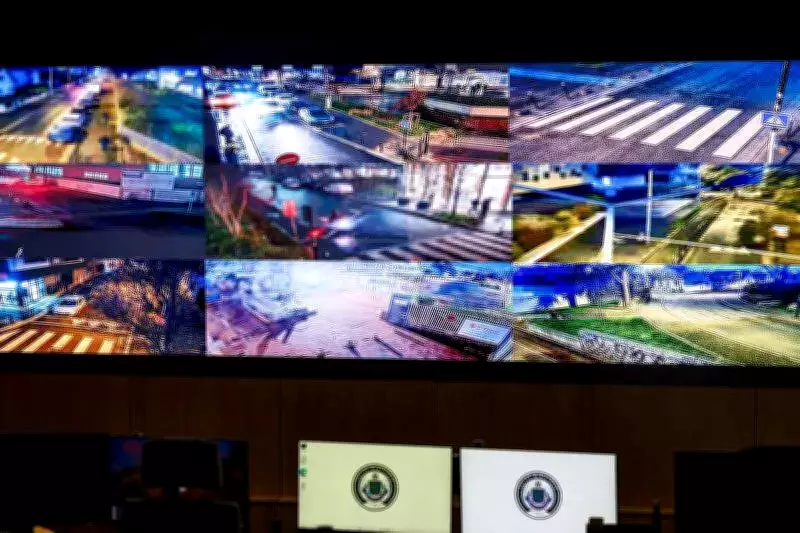
The Rajasthan government on Thursday presented a significant update to the Supreme Court regarding surveillance infrastructure across its police stations. In an affidavit submitted during a suo motu hearing on custodial deaths, the state revealed substantial progress in CCTV installation and coverage.
Enhanced Surveillance Coverage in Police Stations
According to the official disclosure, 915 out of Rajasthan's 1,050 police stations now have functional CCTV systems installed. This represents a substantial majority of police facilities across the state. Furthermore, the state government highlighted that 10 additional police stations are currently under construction, indicating ongoing expansion of law enforcement infrastructure.
Substantial Increase in Camera Density
Perhaps more importantly, the state reported a remarkable improvement in camera density per police station. Where previously each station averaged just six CCTV cameras, that number has now increased to 16 cameras per station – nearly triple the previous coverage. This enhancement significantly improves monitoring capabilities within police facilities.
"We informed the court that out of 1050 police stations in the state, CCTV was installed in 915 police stations," stated Shiv Mangal Sharma, Additional Advocate General representing Rajasthan. "Earlier, we had 6 CCTV per police station, which now increased to 16 cameras per station."
Financial Commitment to Surveillance Infrastructure
The state government has demonstrated its commitment to strengthening surveillance systems through substantial financial allocation. Rajasthan has earmarked an additional ₹75.12 crore specifically for enhancing CCTV infrastructure across police stations. This investment underscores the priority given to improving monitoring and accountability mechanisms within law enforcement facilities.
Context of Supreme Court Proceedings
The disclosure came during Supreme Court proceedings addressing 14 alleged custodial deaths across Rajasthan, including seven cases specifically in Udaipur. The apex court had taken cognizance of these incidents and sought detailed information about measures implemented to install CCTV cameras in police stations as a preventive and accountability measure.
Rajasthan Recognized as Model State
Senior Advocate Siddharth Dave, appearing as amicus curiae in the case, highlighted Rajasthan's affidavit and compliance framework during the proceedings. He observed that Rajasthan has emerged as a model state in implementing the Supreme Court's directions regarding CCTV installation in police stations. This recognition acknowledges the state's proactive approach to addressing judicial concerns about custodial safety and transparency.
National Implications and Next Steps
Following Rajasthan's submissions, a bench comprising Justice Vikram Nath and Justice Sandeep Mehta issued directions with national implications. The court ordered that all Directors General of Police and Home Secretaries from every state and union territory participate in a virtual conference scheduled for February 21, 2026.
This conference, to be conducted with the amicus curiae, will serve multiple purposes:
- Assess the current status of CCTV installations nationwide
- Examine institutional mechanisms for implementation
- Ensure uniform national compliance with constitutional safeguards in custodial environments
Centralized Surveillance Architecture Mandated
The Supreme Court further emphasized the necessity for a comprehensive surveillance framework. The bench stressed that each state must establish a centralized server system that connects all police station CCTV networks. This architecture would enable:
- Centralized monitoring capabilities
- Enhanced data integrity and security
- Improved auditability of surveillance footage
- Greater institutional accountability
This directive aligns with constitutional safeguards and references the Supreme Court's 2021 judgment on police reforms and custodial safety. The centralized approach aims to create a standardized, transparent system that prevents tampering, ensures proper maintenance, and facilitates oversight of police station activities across India.
The developments in Rajasthan's police surveillance infrastructure represent a significant step toward greater transparency in law enforcement. As the state continues to implement these improvements and the Supreme Court pushes for nationwide standardization, these measures could substantially enhance accountability and potentially reduce incidents of custodial misconduct across the country.