

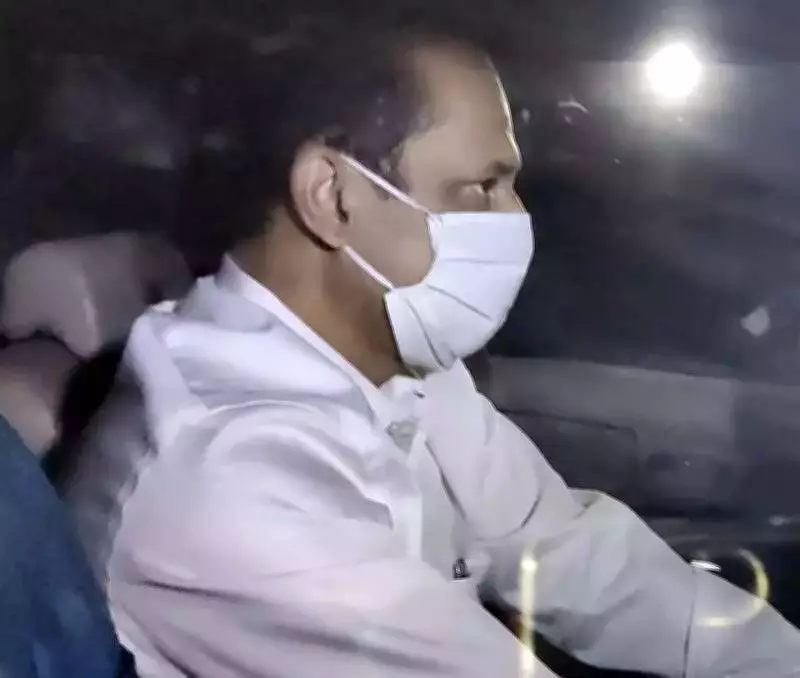
Dismissed Cop Sachin Waze Moves Court for Discharge in Antilia Explosives and Murder Case
In a significant legal development, dismissed Mumbai police officer Sachin Waze has filed an application before the special National Investigation Agency (NIA) court seeking his discharge in the high-profile case involving the alleged recovery of explosives near industrialist Mukesh Ambani's residence and the subsequent death of automobile parts dealer Mansukh Hiran. Waze has vehemently argued that the entire prosecution is constructed upon what he describes as a "comedy of errors" and "farcical" investigative procedures, which he claims fail to meet the stringent legal standards necessary to sustain a trial.
Waze Challenges Terror Charges and Investigative Methods
In his detailed plea, Waze asserted that his prolonged incarceration is not based on concrete evidence but rather on rhetoric filled with satirical value. "During this undue prolonged incarceration, I have come to the conclusion that I am so unfortunate that my liberty has been curtailed not based upon 'evidence', but based upon a rhetoric which is full of comedy of errors and thus, have classic satiric values," the application stated. He further contended that the prosecution has failed to establish any intent to strike terror, suggesting the incident was merely a "hoax" or "prank" that did not disrupt public order or incite panic among citizens.
Challenging the invocation of the Unlawful Activities (Prevention) Act (UAPA), Waze argued that the mere presence of unexplodable gelatin sticks does not constitute a terrorist act. He emphasized that the NIA invoked the UAPA without proper jurisdiction and that the technical evidence relied upon is fundamentally flawed and technologically impossible. Additionally, Waze questioned the validity of gait analysis conducted by investigators, which allegedly implicated him through CCTV footage. "As a matter of fact, and record that I have absolutely no motive to murder Mansukh and also as a matter of record that the farcical analysis test conducted on CSMT and Kalwa stations do not form evidence in the entire chargesheet," the plea highlighted.

Background of the Antilia Explosives Case and Hiran's Death
The case dates back to February 25, 2021, when a Scorpio vehicle containing explosives was discovered near Antilia, the south Mumbai home of billionaire Mukesh Ambani. Subsequently, on March 4, 2021, the owner of the Scorpio, Mansukh Hiran, was found dead under suspicious circumstances. The prosecution has alleged that Hiran was aware of the conspiracy surrounding the explosives, linking his murder to the broader plot.
In total, ten accused individuals are named in the case, including dismissed police officers Sunil Mane, Sachin Waze, and Pradeep Sharma. Notably, Sharma and Mane have been granted bail and are currently out of custody, while Waze remains incarcerated as he contests the charges against him. The NIA has been leading the investigation, asserting that the evidence points to a coordinated effort involving law enforcement personnel.
Legal Implications and Next Steps
Waze's application for discharge raises critical questions about the robustness of the investigative process and the application of anti-terror laws in India. His arguments focus on the alleged lack of substantive evidence and procedural irregularities, which he claims undermine the prosecution's case. The special NIA court is now tasked with evaluating these claims, with potential implications for the other accused and the overall trajectory of the trial.
As the legal proceedings unfold, this case continues to attract significant public and media attention, highlighting issues of police accountability, judicial oversight, and the challenges in prosecuting complex terror-related allegations. The outcome of Waze's discharge plea could set important precedents for similar cases in the future, emphasizing the need for meticulous evidence collection and adherence to legal standards in high-stakes investigations.






