

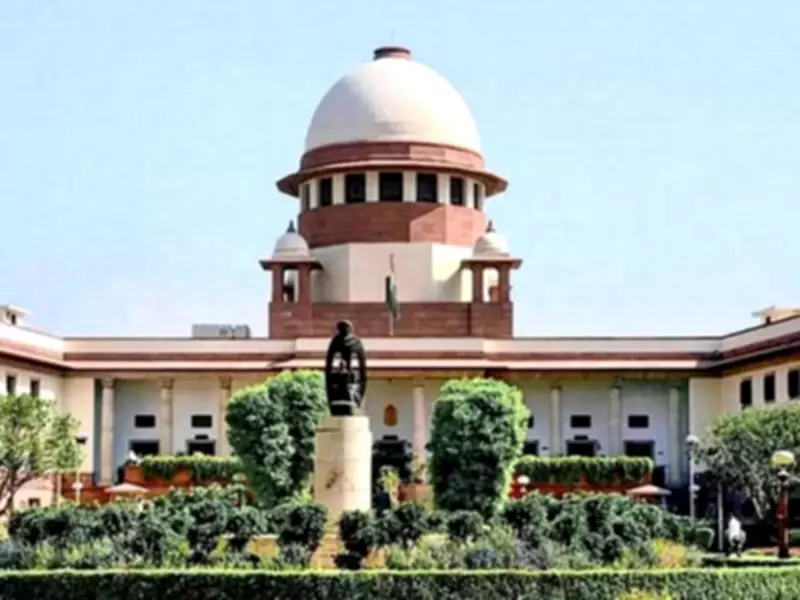
Supreme Court Accepts Apology, Ends Contempt Case Against YouTuber Ajay Shukla
The Supreme Court of India on Monday formally closed the suo motu contempt proceedings that had been initiated against YouTuber Ajay Shukla. This action was taken after Shukla tendered an unconditional apology for making defamatory remarks against a former apex court judge. A bench comprising Justices Dipankar Datta and Satish Chandra Sharma decided to accept the apology and terminate the legal proceedings against him.
Court Issues Stern Warning Against Future Misconduct
While accepting the apology, the bench issued a clear and firm warning to Shukla, emphasizing that any recurrence of such conduct or similar complaints in the future would attract severe consequences. The court explicitly stated, "Any recurrence of conduct or complaint would attract severe consequences," underscoring the judiciary's commitment to maintaining its dignity and authority.
Background of the Contempt Proceedings
The contempt proceedings were initiated on May 30 last year after Shukla made scandalous allegations on his YouTube channel, 'The Principle,' against Justice Bela M. Trivedi, a former Supreme Court judge. A bench headed by the then Chief Justice of India, B R Gavai, took suo motu cognizance of the matter, recognizing the serious nature of the remarks.

Judicial Emphasis on Freedom of Speech and Its Limits
In its observations, the court highlighted the balance between constitutional rights and judicial integrity. It noted, "No doubt that the Constitution of India guarantees the right to freedom of speech and expression; however, at the same time, such right is subject to reasonable restrictions. A person cannot be permitted to make allegations which are in the nature of defaming a Judge of this Court or any other Court and also which are contemptuous in nature, that attempt to bring disrepute to the institution of the Judiciary." This statement reinforces the legal boundaries that protect the judiciary from unfounded attacks while upholding free speech principles.
The closure of this case marks a significant resolution in a matter that underscores the ongoing tension between digital media expression and judicial propriety in India.






