Supreme Court Raises Alarm Over AI-Generated Fake Judgments in Legal Petitions
As global leaders and technology giants deliberate on harnessing the benefits of artificial intelligence while mitigating its risks, the Supreme Court of India has voiced significant concern over a troubling trend in the legal profession. The court has expressed alarm over the growing practice of advocates using AI tools to draft petitions, which has led to the citation of fictional judgments and non-existent legal precedents.
CJI Surya Kant Highlights the Issue
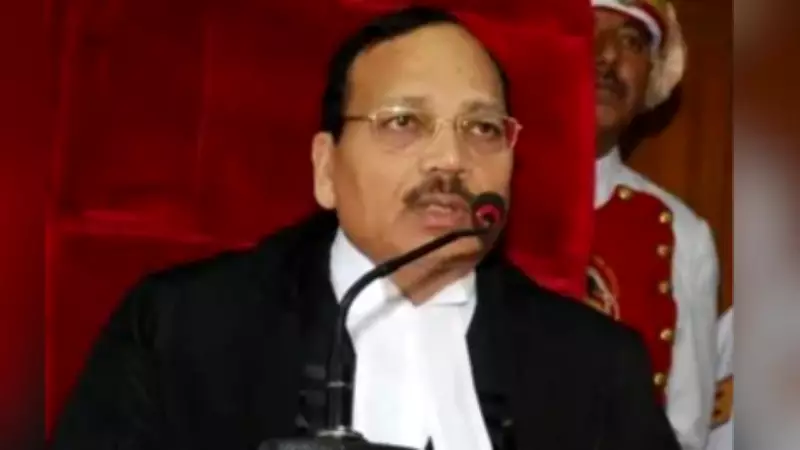
Chief Justice of India Surya Kant stated, "We are alarmed to learn that lawyers are using AI to draft petitions. It is very unfortunate that the petitions quote non-existent paragraphs from judgments." Justice B V Nagarathna echoed this concern, citing a specific example where a non-existent judgment titled "Mercy vs Mankind" was referenced in a petition. This phenomenon, often referred to as AI "hallucination," has parallels in the United States and other countries, where large language models generate inaccurate or fabricated content.
Impact on Judicial Efficiency
CJI Kant emphasized that AI-provided fake quotes have made the judges' tasks more challenging. "It makes the judges' task more difficult. Now, they must not only go through the pleadings, but also scrutinise the authenticity of every paragraph quoted from cited judgments," he said. Justice Nagarathna added that there are several instances where petitions quote paragraphs from Supreme Court judgments that, upon scrutiny, do not exist in the actual rulings. This has resulted in a waste of precious judicial time and resources.
Recent Cases of AI Misuse in Courts
Several high courts across India have encountered similar issues:
- Bombay High Court: Imposed a cost of Rs 50,000 on Heart and Soul Entertainment Ltd for submitting AI-generated arguments that cited a non-existent case, "Jyoti w/o Dinesh Tulsiani Vs. Elegant Associates." The court noted that this led to significant effort in verifying the case, wasting judicial time.
- Delhi High Court: Found a petitioner relying on "AI hallucination" by citing paragraphs from two judgments, one of which does not exist and another where the quoted paragraphs were fabricated.
- Andhra Pradesh High Court: Refused to quash an order from a trial court judge who relied on an AI-prompted non-existent ruling, though the legal principles applied were deemed correct.
- Karnataka High Court: Took adverse note of a city civil judge using non-existent Supreme Court judgments to pass an order, calling for further inquiry into the matter.
Judicial Guidance on AI Use
The Bombay High Court provided clear guidance on the responsible use of AI in legal research. "If an AI tool is used in aid of research, it is welcome; however, there is great responsibility upon the party, even an advocate using such tools, to cross verify the references and make sure that the material generated by the machine/computer is relevant, genuine and in existence," the court stated. This underscores the need for lawyers to exercise due diligence when incorporating AI-generated content into legal documents.
Historical Context and Call for Precision
The bench, comprising CJI Kant and Justices Nagarathna and Joymalya Bagchi, recalled the era when senior advocate and former law minister A K Sen drafted crisp and accurate petitions. This serves as a reminder of the high standards expected in legal drafting, contrasting with the current issues posed by AI tools. The Supreme Court's alarm highlights a critical challenge at the intersection of technology and law, urging the legal community to adopt AI responsibly to maintain the integrity of judicial processes.