

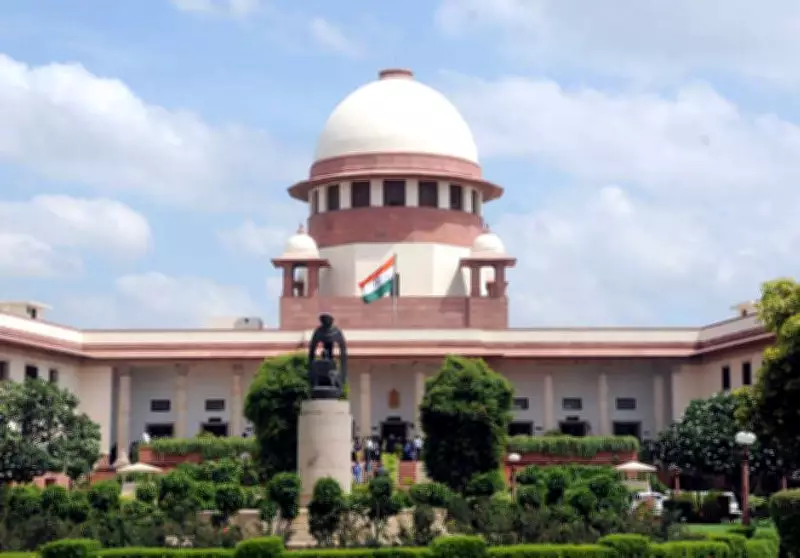
Supreme Court Permits Reclaiming of Scheduled Caste Status for Reconverted Hindu Dalits
In a landmark judgment, the Supreme Court of India has declared that Hindu Dalits who reconvert to Hinduism, Sikhism, or Buddhism after adopting another religion may regain their Scheduled Caste status, provided they satisfy specific, rigorous conditions. The ruling, delivered on Tuesday, emphasizes that the burden of proof lies entirely on the claimant, requiring unimpeachable evidence to support their case.
Conditions for Reclaiming Scheduled Caste Status
The bench, comprising Justice PK Mishra and Justice Manmohan, outlined three mandatory and cumulative conditions that must be met for a successful claim:
- Original Caste Proof: The individual must provide clear proof that they originally belonged to a caste notified under the Constitution (Scheduled Castes) Order, 1950.
- Bona Fide Reconversion Evidence: There must be credible and unimpeachable evidence of bona fide reconversion to the original religion. This includes complete renunciation of the previous religion, total dissociation from it, and actual adoption of the customs, practices, and rituals of the original caste.
- Community Acceptance: Satisfactory evidence must establish acceptance and assimilation by members of the original caste and community. Mere self-proclamation is insufficient; the community must recognize and accept the person as one of their own.
The court stressed that failure to establish even one of these conditions renders the claim unsustainable, highlighting the stringent nature of the requirements.

Exclusion for Converts to Christianity or Islam
The judgment clarified that Hindu Dalits who convert to Christianity or Islam cannot claim Scheduled Caste status or the associated benefits under the Constitution and various laws. However, if such individuals reconvert back to Hinduism, Sikhism, or Buddhism and meet the prescribed conditions, they may reclaim their status. The loss of Scheduled Caste status results in the automatic termination of all statutory benefits, protections, reservations, and entitlements linked to that membership.
Distinction for Scheduled Tribes
In a notable distinction, the Supreme Court addressed the status of Scheduled Tribes, noting that the Constitution (Scheduled Tribes) Order, 1950, does not prescribe religion-based exclusion. Unlike for Scheduled Castes, conversion alone does not determine Scheduled Tribe status. Instead, it depends on whether the claimant continues to possess and is recognized for essential tribal attributes, such as customary practices, social organization, community life, and acceptance by the tribal community.
The court explained that if conversion or subsequent conduct leads to a complete severance from tribal life and loss of community recognition, the basis for Scheduled Tribe status is eroded. Conversely, if these attributes are demonstrably subsisting or genuinely re-established and accepted, the claim cannot be rejected mechanically. The assessment in such cases is fact-specific and left to competent authorities to decide in accordance with constitutional principles.
Implications and Legal Framework
This ruling reinforces the legal framework surrounding caste and religious identity in India, balancing individual rights with community integrity. By setting high evidentiary standards, the Supreme Court aims to prevent fraudulent claims while ensuring justice for those genuinely seeking to reconnect with their original heritage. The decision is expected to impact future cases involving reconversion and caste-based benefits, providing clearer guidelines for courts and authorities.
As India continues to navigate complex social and legal issues, this judgment underscores the importance of evidence-based assessments in matters of identity and constitutional rights, promoting fairness and transparency in the application of laws.






