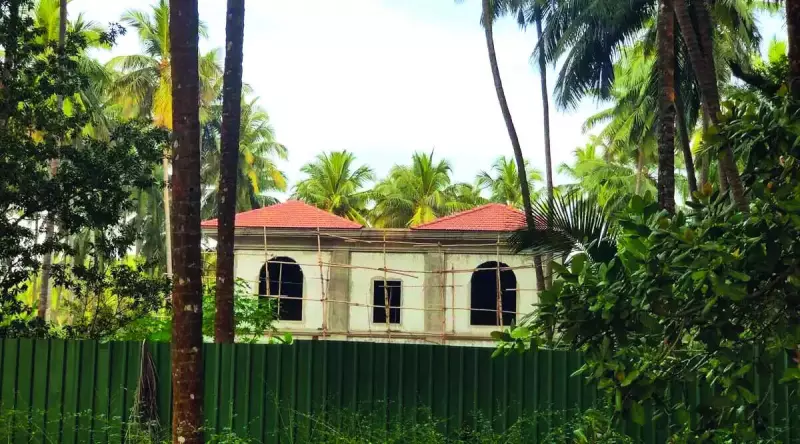
The Supreme Court of India has stepped into a heritage conservation dispute in Goa, appointing a retired judge to conduct a fresh inspection of a controversial bungalow constructed in Old Goa. This move comes after an Archaeological Survey of India (ASI) report alleged significant violations of heritage laws.
Court Orders Fresh Probe Led by Retired Judge
In a significant development, the Supreme Court has appointed retired district and additional sessions judge Edgar Fernandes to undertake and oversee a new inspection of the disputed property. The court directed that the inspection be completed and a report submitted within four weeks. To assist in this task, the retired judge is authorized to seek help from key experts.
These experts include the superintending archaeologist of the ASI's Goa Circle and a senior officer from the town and country planning department. The court's decision for a fresh look stems from an ASI inspection report dated February 2, 2024, which raised serious questions about the nature of the construction on the site.

ASI Report Alleges Major Violations
The core of the controversy lies in the permission granted on February 3, 2020. This permission was specifically for the repair of a dilapidated coconut shed measuring 7m x 7.2m. However, the ASI's findings tell a different story.
The archaeology director informed the Supreme Court that an ASI team inspected the site on February 1, 2024. Their conclusion was stark: the construction undertaken by Suvarna Lotlikar (or the new owner) was not covered under the 2020 repair permission and thus violated the Ancient Monuments and Archaeological Sites and Remains (AMASR) Act of 1958.
The inspection report provided a detailed sequence of events. It stated that Suvarna Lotlikar disguised the shed as her ancestral property to obtain the repair permit. Subsequently, instead of repairing it, she demolished the original structure. This act was in complete violation of the permission's terms. The report noted that this demolition was documented and brought to the ASI director general's attention as early as January 6, 2021. The building that now stands on the site is described as a completely modern construction.
Legal Background and Next Steps
The Supreme Court is currently hearing petitions filed by heritage activists. These petitions challenge a Bombay High Court order from February 2023 that had set aside the ASI's original demolition order, citing procedural lapses.
The apex court observed that the High Court did not have the benefit of the crucial material presented in the February 2024 ASI inspection report when it passed its judgment. To achieve better clarity on what exactly was built after the 2020 permission, the Supreme Court deemed a fresh inspection necessary.
The appointment of a neutral, retired judicial officer underscores the seriousness with which the court is treating the allegations of heritage law violations in the historically sensitive zone of Old Goa. All eyes will now be on the report expected from retired judge Edgar Fernandes in the coming weeks.