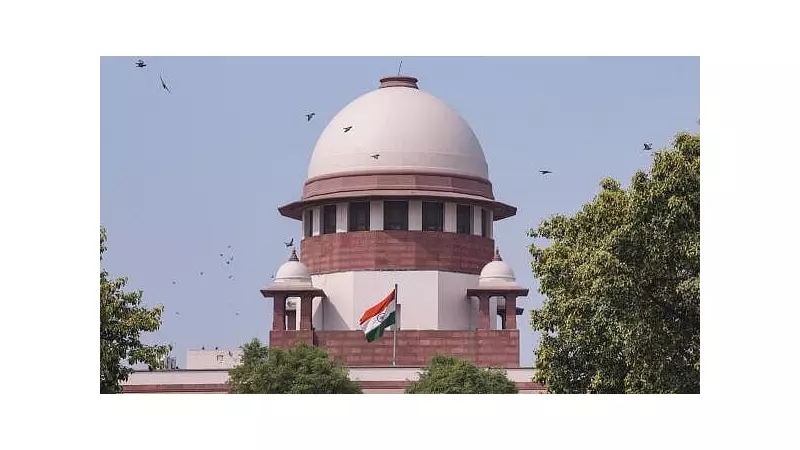
In a significant move to decentralize justice and improve legal access, the Supreme Court of India has given its formal approval for establishing Kolhapur as an additional place of sitting for the Bombay High Court. This endorsement paves the way for the operationalization of a long-awaited bench in the western Maharashtra region.
Supreme Court Bench Validates High Court Notification
A Supreme Court bench comprising Justices Aravind Kumar and N V Anjaria upheld the validity of the August 1, 2025 notification issued by the Bombay High Court. This official notification designated Kolhapur as a place where judges and division courts of the High Court may hold sittings. The apex court's approval, delivered on 27 December 2025, removes any legal hurdles and finalizes the administrative process for setting up the bench.
The decision signifies the Supreme Court's support for the Bombay High Court's internal administrative order to expand its footprint. By approving this notification, the top court has reinforced the High Court's authority to create additional benches to manage its caseload and serve citizens across the vast state more effectively.

Boosting Judicial Access in Western Maharashtra
The establishment of an additional bench in Kolhapur is expected to have far-reaching consequences for the judicial landscape of Maharashtra. For decades, litigants, lawyers, and witnesses from the southwestern parts of the state, including the districts of Kolhapur, Sangli, Satara, and Sindhudurg, have had to travel long distances to Mumbai, the principal seat of the Bombay High Court. This posed significant financial and logistical challenges.
With the new bench, access to justice will be dramatically improved. Key benefits include:
- Reduced travel time and costs for thousands of citizens.
- Faster disposal of cases by alleviating the burden on the main Mumbai bench.
- Decentralization of the judiciary, bringing it closer to the people.
- Economic and infrastructural development in and around Kolhapur city.
A Step Towards Decentralized Justice
The Supreme Court's approval marks the culmination of persistent demands from local bar associations, civil society, and political representatives from the region. It aligns with the broader national objective of ensuring that justice is not a distant ideal but an accessible service. The bench of Justices Aravind Kumar and N V Anjaria, by endorsing the High Court's decision, has emphasized the importance of administrative flexibility in the judiciary to meet regional needs.
This development is now set to transition into its implementation phase. The Bombay High Court administration will work on the logistical details, including infrastructure, staffing, and scheduling, to make the Kolhapur bench functional. For the residents of western Maharashtra, this judicial reform promises a new era of legal convenience and efficiency.