

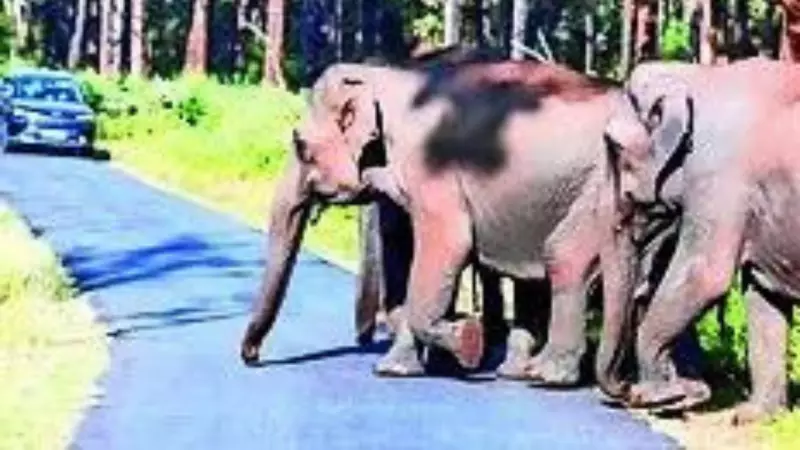
In a landmark stance on the age-old conflict between human development and wildlife conservation, the Supreme Court of India has firmly declared its inclination to protect silent animal victims. The court's position came during a hearing on Friday concerning the fate of numerous wildlife resorts situated on crucial elephant pathways in Tamil Nadu's Nilgiris district.
The Core Conflict: Tourism vs. Elephant Corridors
A bench led by Chief Justice Surya Kant, alongside Justices Joymalya Bagchi and Vipul M Pancholi, was addressing petitions filed by resort owners. These owners are challenging orders to vacate their properties after the Tamil Nadu government officially notified elephant corridors in the Sigur Plateau region. The legal battle stems from a September 12 order by the Madras High Court, which upheld the recommendations of a Supreme Court-appointed expert committee.
The committee, headed by former judge K Venkataraman, had conclusively declared that land purchased by private parties within the Sigur Plateau elephant corridors was illegal. It mandated that all constructions on these lands must be dismantled. This finding was based on alarming data presented by the Nilgiris District Collector to the apex court, revealing over 800 constructions inside the corridor, including 39 resorts and 390 private houses.

Legal Arguments and the Court's Firm Stand
Representing the resort owners, senior advocates Salman Khurshid and Shoeb Alam put forth a defense centered on timing and intent. They argued that their clients had purchased the properties long before the official notification of the elephant corridors. The lawyers pleaded that these businesses, which they described as eco-friendly, should be allowed to continue operating with a strict condition prohibiting any future expansion.
The Supreme Court bench, however, remained unconvinced by these arguments. It underscored the committee's clear finding that all the establishments were commercial ventures operating directly on the elephant corridor, inevitably obstructing the movement of elephants. "If at any time there is any doubt where the benefit should go, it must go to these silent victims (elephants and wild animals) of commercial development," the bench asserted, highlighting its priority.
Road Ahead: Final Hearing in January
Despite its firm stance on the principle, the court agreed to a practical request from advocate Shoeb Alam. It decided to club together all related petitions, including some older pending cases, for a comprehensive final hearing. The Supreme Court has scheduled this conclusive hearing for January 5, 2024.
The state authorities have already initiated action based on the committee's report, having sent demolition notices to 35 resorts last year. This case sets a significant precedent for wildlife conservation efforts across India, emphasizing that the right to habitat and free movement for endangered species like elephants may supersede prior commercial claims when critical migration paths are at stake.

