

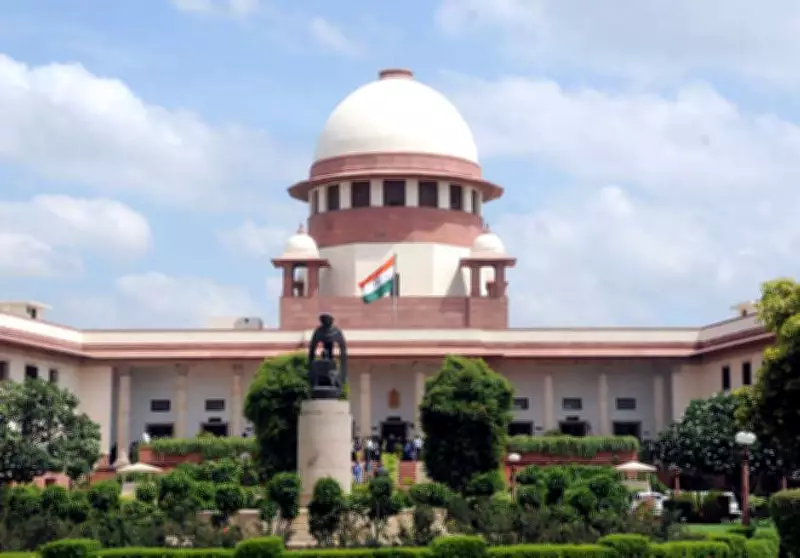
Supreme Court Stresses Need for Uniform Civil Code in Landmark Hearing
The Supreme Court of India has reignited the debate on the Uniform Civil Code (UCC) during a significant hearing on a petition that challenges certain provisions of Shariat law as discriminatory. The apex court observed that the time is ripe for implementing a UCC to ensure equality and justice across all communities in the country.
Petition Challenges Discriminatory Aspects of Shariat Law
The case before the Supreme Court involves a petition filed by individuals and organizations alleging that specific provisions under Shariat law, particularly those related to marriage, divorce, and inheritance, perpetuate gender-based discrimination and violate constitutional principles. The petitioners argue that these laws create disparities that undermine the fundamental rights guaranteed to all citizens under the Indian Constitution.
During the proceedings, the Supreme Court justices highlighted the importance of a Uniform Civil Code as a means to harmonize personal laws and eliminate inconsistencies. They noted that while India has made strides in various sectors, the persistence of disparate personal laws based on religion continues to pose challenges to national integration and social cohesion.

Historical Context and Legal Framework
The concept of a Uniform Civil Code is enshrined in Article 44 of the Indian Constitution, which directs the state to endeavor to secure a UCC for citizens throughout the territory of India. However, its implementation has been a contentious issue for decades, with debates often centered around religious freedom and cultural diversity.
In this hearing, the Supreme Court referenced past judgments and constitutional mandates to underscore the urgency of addressing legal pluralism. The court pointed out that discriminatory practices in personal laws not only affect women's rights but also hinder the country's progress towards a more equitable society.
Implications and Reactions
The Supreme Court's remarks have sparked widespread discussions among legal experts, policymakers, and the public. Proponents of the UCC argue that it would promote gender equality and simplify the legal system, while opponents express concerns about potential infringement on religious autonomy and traditions.
- Legal Reforms: The hearing could pave the way for legislative actions aimed at reforming personal laws to align with constitutional values.
- Social Impact: A move towards a Uniform Civil Code may lead to significant changes in family law practices across different communities.
- Political Debate: The issue is likely to feature prominently in political discourse, especially with upcoming elections and policy discussions.
The Supreme Court has adjourned the hearing for further deliberations, but its initial observations have already set the stage for a renewed focus on legal uniformity in India. As the nation grapples with these complex issues, the call for a Uniform Civil Code resonates as a critical step towards justice and equality for all citizens.






