Supreme Court Asserts Authority to Determine Superstition in Religious Practices
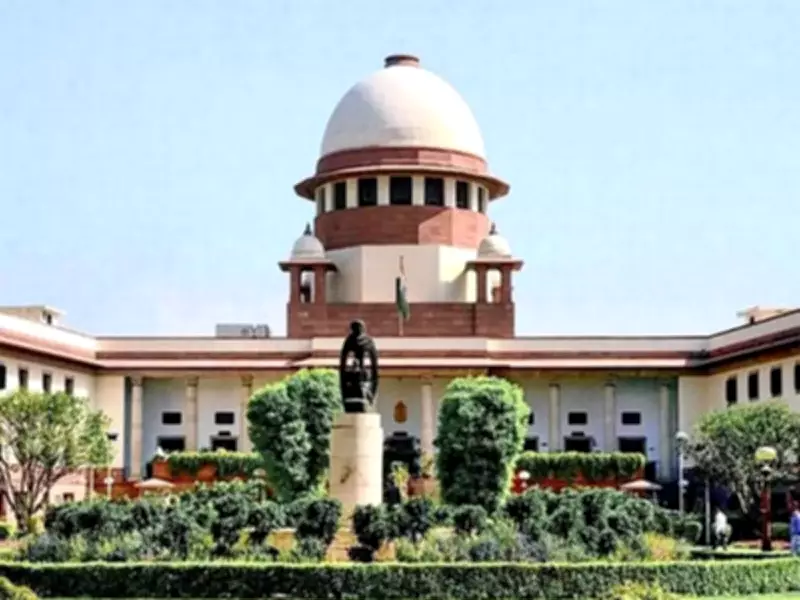
The Supreme Court of India made a significant observation on Wednesday, firmly stating that it possesses the authority and jurisdiction to evaluate whether a practice within a religion qualifies as superstitious. This declaration directly challenges the Centre's contention that such determinations fall outside the purview of judicial scrutiny, marking a pivotal moment in the ongoing debate over religious freedom and constitutional limits.
Hearing on Discrimination and Religious Freedom
The remarks emerged during a hearing of petitions addressing discrimination against women at various places of worship, prominently including the Sabarimala temple in Kerala. The broader context involves examining the scope of religious freedom as enshrined in the Constitution, with a nine-judge Constitution bench, led by Chief Justice of India Surya Kant, delving into the extent of permissible court intervention across diverse faiths.
At the outset, Solicitor General Tushar Mehta, representing the Centre, raised objections to judicial assessment of superstition. He argued that even if a practice is deemed superstitious, it is not the court's role to label it as such. Citing Article 25(2)(b) of the Constitution, Mehta emphasized that the legislature should enact reform laws, pointing to existing statutes like those preventing black magic as examples of legislative action in this domain.

Judicial Pushback and Philosophical Debates
In response, Justice Ahsanuddin Amanullah countered that Mehta's argument was overly simplistic, asserting that courts are indeed empowered to examine whether a practice is superstitious. He clarified that while legislative follow-up is crucial, courts cannot accept legislative decisions as the final word without scrutiny. Mehta maintained that secular courts lack the expertise to evaluate religious doctrines, highlighting India's religious diversity as a complicating factor where practices considered religious in one region might be viewed as superstitious in another.
Justice Joymalya Bagchi posed a hypothetical scenario involving practices like witchcraft, questioning whether they could be protected as religious. He asked if the court could use the 'doctrine of unoccupied field' to issue prohibitions based on health, morality, and public order if the legislature remains silent. Mehta conceded that judicial review is justified on these grounds but not merely on labeling a practice as superstition.
Meanwhile, Justice B V Nagarathna stressed that courts must assess essential religious practices within the framework of each religion's own philosophy, subject to considerations of health, morality, and public order. This nuanced approach underscores the bench's effort to balance religious autonomy with constitutional safeguards.
Background and Ongoing Proceedings
The hearing traces back to the Supreme Court's September 2018 verdict, where a five-judge Constitution bench, by a 4:1 majority, struck down the ban on women aged 10 to 50 entering the Sabarimala Ayyappa temple, deeming it unconstitutional. Subsequently, on November 14, 2019, another five-judge bench, led by then Chief Justice Ranjan Gogoi, referred related questions to a larger bench by a 3:2 majority, framing broader issues on religious freedom across faiths. The current proceedings are ongoing, with the bench continuing to explore these complex legal and social dimensions.