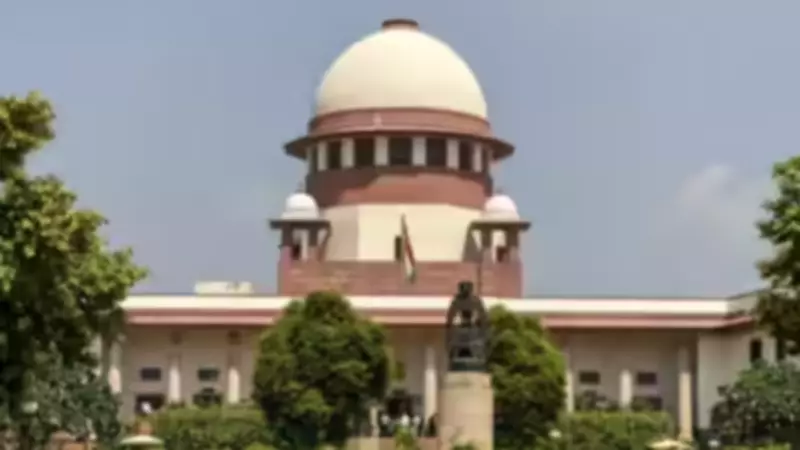
The Supreme Court on Tuesday observed that courts are not barred from determining the government's additional liability towards citizens in the event of an unforeseen nuclear power plant accident, notwithstanding the cap on operator's liability at Rs 4,000 crore under the Sustainable Harnessing and Advancing of Nuclear Energy for Transforming India (SHANTI) Act.
A bench comprising Chief Justice Surya Kant and Justices Joymalya Bagchi and Vipul M Pancholi made the remarks after petitioner E S Sarma's counsel, Prashant Bhushan, argued that the legislation had fixed operator's liability at a mere Rs 4,000 crore, even though compensation for citizens in case of an accident could run into tens of thousands of crores. Bhushan contended that such a low liability cap would make foreign suppliers lax in enforcing safety norms, turning nuclear plants into a constant threat to nearby residents. He further suggested that if the government used 6% of available wasteland for solar plants, it could generate six times the current electricity requirement.
Court's Observations on Liability and Jurisdiction
The CJI-led bench asked, "Does the Act say that constitutional courts' jurisdiction is barred from entertaining pleas from citizens demanding higher compensation if, God forbid, a mishap happens in a nuclear power plant?" It added, "If liability after a mishap works out to Rs 40,000 crore, the nation in a parliamentary regime can say it absolves the operator beyond Rs 4,000 crore. But that doesn't bind courts from determining the actual liability of the government towards each affected citizen. Nobody can curtail even tribunals' powers to award adequate compensation."

Policy Considerations and Foreign Investment
The bench noted, "The technology is not available in India and if a very high liability clause is incorporated, would foreign investors come to India? The issue appears to be in the policy domain of the government." When Bhushan pressed for solar capacity, the Supreme Court responded, "It is not for courts to guide government on policy matters. When the state decides to cap liability at Rs 4,000 crore, should we second guess it?"
The court adjourned the hearing to the second week of July.