Supreme Court Directive on DGP Appointments Intensifies Pressure on Punjab Government
The Supreme Court of India has issued a significant order directing the Union Public Service Commission (UPSC) to take proactive measures against states that delay the appointment of full-time Directors General of Police (DGPs). This directive has placed the Punjab government, led by the Aam Aadmi Party (AAP), under intense scrutiny due to its prolonged reliance on an acting DGP.
Extended Tenure of Acting DGP Draws Judicial Criticism
In Punjab, 1992-batch IPS officer Gaurav Yadav has been serving as the officiating DGP for over three and a half years, since July 5, 2022. This extended interim role has been highlighted as the longest among defaulting states in Supreme Court proceedings, drawing particular criticism for violating guidelines that limit acting tenures to six months. The court's order now potentially forces the state government to expedite a permanent appointment, risking legal consequences, including contempt actions, if it fails to comply.
Supreme Court Bench Expresses Strong Disapproval
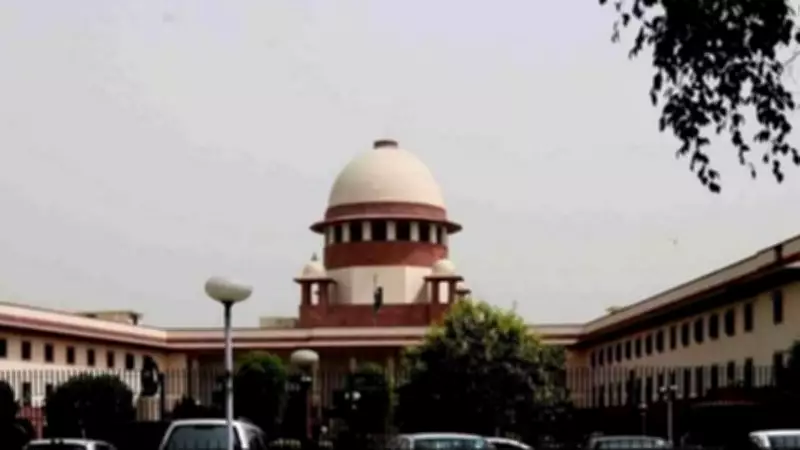
The directive came during a hearing on Thursday on a UPSC plea challenging a January 2025 Telangana High Court order. The Supreme Court bench, comprising Chief Justice Surya Kant and Justice Joymalya Bagchi, expressed strong disapproval of the "acting DGP" culture prevalent in several states. They noted that this practice undermines the stability and independence of police leadership as envisioned in the landmark 2006 Prakash Singh judgment.

The court empowered the UPSC to directly remind states of impending vacancies and, in cases of persistent delays, file applications in the Prakash Singh case for accountability. This includes initiating contempt actions against errant governments, amplifying ongoing judicial pressure on Punjab, which has been repeatedly cited for non-compliance.
Punjab's Legislative Move and Legal Challenges
The AAP government has previously defended its stance by pointing to the Punjab Police (Amendment) Act, 2023. This legislation establishes a state-led committee for DGP selection, aiming to reduce central oversight and arguing for state autonomy. The committee is chaired by a retired High Court judge and includes members from the UPSC and state bodies, tasked with preparing a panel of three officers and appointing a DGP with a three-year tenure.
However, this Bill remains pending presidential assent and has been viewed skeptically by the Supreme Court in prior hearings. Legal experts suggest it potentially conflicts with the Prakash Singh directives requiring UPSC involvement. Punjab cited this Bill in its November 2024 reply to the Supreme Court, claiming it aligns with the 2006 ruling while allowing local control. Yet, similar state laws have been challenged or suspended by the Supreme Court for conflicting with central guidelines.
Implications for Gaurav Yadav and Political Reactions
Legal experts suggest the implications for Gaurav Yadav could be twofold. On one hand, his recent empanelment in February 2025 for Director General-level posts at the Centre positions him as a strong candidate for formal elevation, either in Punjab or elsewhere. On the other hand, critics argue that his appointment bypassed the mandatory UPSC process, making it vulnerable to challenge. If Punjab delays further, the UPSC's new authority could result in Yadav's removal, disrupting continuity in a state already facing criticism over law and order issues, including gang violence and drug trafficking.
Opposition leaders have accused the government of politicising the police force. SAD leader Bikram Singh Majithia has called Gaurav Yadav an ad-hoc DGP, while Congress leaders like Gurdaspur MP Sukhjinder Singh Randhawa and MLA Sukhpal Singh Khaira have attacked the AAP government for not appointing a DGP from a panel of three senior-most IPS officers.

Senior IPS Officers in Punjab and Future Proceedings
As of now, the senior-most IPS officer in Punjab is Sanjeev Kalra, a 1989-batch officer due to retire on February 28, 2026. Another officer of the same batch, Parag Jain, is on central deputation and heads the Research and Analysis Wing (R&AW). The next senior in line are officers of the 1992 batch, including Sharad Satya Chauhan, Harpreet Singh Sidhu, Kuldeep Singh, and Gaurav Yadav. Sidhu was repatriated to the Punjab cadre in September 2024 at his own request and has been awaiting a posting since then.
With the Supreme Court scheduling further reviews in the broader contempt cases against six states, including Punjab, for March 2025, the AAP government will face intensified scrutiny. This may accelerate the appointment process to avoid escalation and potential legal repercussions, as the court's latest order effectively hands the UPSC a tool to compel Punjab to submit a list of eligible officers for vetting.