

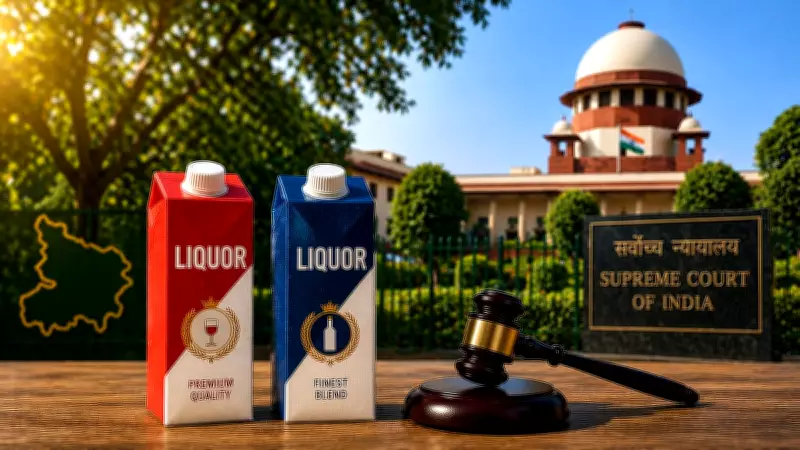
Supreme Court Declines to Hear PIL Against Liquor Tetra Packs in Uttar Pradesh
The Supreme Court of India has taken a decisive stance on a Public Interest Litigation (PIL) that sought to challenge the sale of liquor in tetra packs within the state of Uttar Pradesh. In a significant ruling, the apex court has dismissed the PIL, directing the petitioner to first approach the relevant state authorities before seeking judicial intervention. This development underscores the court's emphasis on exhausting administrative remedies prior to legal recourse, a principle that often guides judicial proceedings in such matters.
Background of the PIL and Uttar Pradesh's New Excise Policy
The PIL was filed in response to Uttar Pradesh's recently approved excise policy, which introduces several transformative changes to the state's liquor regulation framework. Key among these reforms is the introduction of an e-lottery system for the allocation of liquor shops, a move aimed at enhancing transparency and reducing corruption in the licensing process. Additionally, the policy includes provisions for the sale of 'bhang' (cannabis) through regulated shops, reflecting a broader shift in the state's approach to controlled substances.
The controversy specifically centers on the sale of liquor in tetra packs, a packaging method that has raised concerns among petitioners regarding potential health risks, environmental impact, and ease of access. Critics argue that tetra packs could facilitate underage drinking or misuse due to their convenience and portability. However, the Supreme Court's decision to not entertain the PIL at this stage suggests that these issues must first be addressed through state-level mechanisms, such as the excise department or legislative bodies.

Implications of the Supreme Court's Ruling
By advising the petitioner to approach state authorities, the Supreme Court has reinforced the importance of hierarchical grievance redressal in governance. This ruling could set a precedent for similar cases across India, where petitioners are encouraged to seek solutions at the administrative level before escalating matters to higher courts. It also highlights the court's role in balancing judicial oversight with respect for state autonomy in policy implementation.
From a legal perspective, this decision may streamline the judicial process by reducing the burden on the Supreme Court for issues that can be resolved locally. For Uttar Pradesh, it provides an opportunity to address concerns about tetra pack liquor sales through its own regulatory frameworks, potentially leading to amendments or clarifications in the excise policy based on public feedback and expert consultations.
Broader Context of Uttar Pradesh's Excise Reforms
The new excise policy in Uttar Pradesh represents a comprehensive overhaul aimed at modernizing the state's liquor trade. Key features include:
- E-Lottery System: This digital platform is designed to ensure fair and transparent allocation of liquor shop licenses, minimizing human intervention and bias.
- Regulation of Bhang Shops: By formalizing the sale of cannabis through licensed outlets, the policy seeks to control its distribution and reduce illicit trade.
- Innovations in Packaging: The allowance for tetra packs is part of a broader trend towards diversifying packaging options, which could impact market dynamics and consumer behavior.
These changes are expected to have significant economic and social implications, from boosting state revenue through excise duties to influencing public health outcomes. The PIL against tetra packs, while dismissed for now, reflects ongoing debates about the balance between commercial interests and societal welfare in alcohol regulation.
Future Outlook and Next Steps
With the Supreme Court's directive, the petitioner is now expected to engage with Uttar Pradesh's excise authorities to present their concerns. This could involve formal complaints, public hearings, or lobbying for policy revisions. State officials may respond by conducting studies on the impact of tetra pack sales, implementing stricter labeling requirements, or considering bans if evidence of harm emerges.

In the meantime, the implementation of the new excise policy continues, with stakeholders monitoring its effects on the ground. Legal experts suggest that if state authorities fail to address the issues adequately, the matter could return to the courts in the future, potentially leading to more substantive judicial review. For now, the focus remains on administrative processes and the evolving landscape of liquor regulation in Uttar Pradesh.
This ruling highlights the intricate interplay between law, policy, and public interest in India's governance framework, setting the stage for further developments in this contentious area.





