Supreme Court Rejects Plea to Restrict Babri Masjid Construction
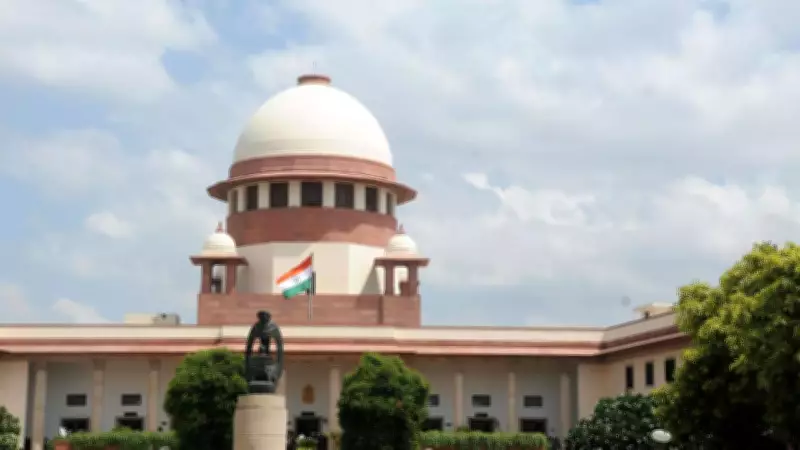
The Supreme Court of India on Friday dismissed a petition that sought to impose restrictions on the construction of any mosque dedicated to Mughal emperor Babar. The plea argued that no mosque in the name of Babur or Babri Masjid should be built anywhere in India, claiming that Babar was an anti-Hindu invader.
Court Proceedings and Petitioner's Arguments
A bench comprising Justices Vikram Nath and Sandeep Mehta dismissed the matter after hearing brief submissions from the petitioner's counsel. During the hearing, the petitioner's lawyer highlighted that a mosque was being constructed in Murshidabad, West Bengal, under the name Babri Masjid, despite historical claims about Babar's actions.
The petitioner contended that Babar, as a Mughal ruler, was an invader with anti-Hindu sentiments, and therefore, any structure honoring him should not be permitted. However, the court did not find merit in these arguments and dismissed the plea without detailed commentary.

Background on the Murshidabad Mosque Project
This legal challenge comes in the wake of developments in Murshidabad, where Jan Unnayan Party chief and former Trinamool Congress MLA Humayun Kabir laid the foundation stone for the Babri Masjid on December 6, 2025. Kabir emphasized the constitutional right to build places of worship, stating that he is not engaging in any unconstitutional activity.
"As anyone can make a temple or church, so can I," Kabir asserted, drawing attention to the protections under Indian law. He also noted that the 37 percent Muslim population of Bengal is committed to completing the construction at any cost, with no one able to move a single brick against their will.
Kabir's Defiance and Broader Plans
Kabir has been vocal about his determination to proceed with the mosque's construction, despite facing legal challenges. He mentioned that five cases have been filed against him, but he remains undeterred, citing faith and constitutional backing.
"No one can stop someone with whom Allah is. The court has also clearly stated that it is written in the Constitution of India that one can build a mosque; it is a right," Kabir declared. On January 2, he further elaborated on the project, announcing plans to build not only the Babri Masjid but also a hospital and a university in Murshidabad.
"A Babri Masjid will be built here, a hospital will be built, a university will be built, and facilities will be created for the benefit of the people," Kabir said at a local event, underscoring the community-oriented nature of the initiative.
Constitutional and Legal Implications
The dismissal of the plea by the Supreme Court reinforces the constitutional framework that guarantees the right to construct places of worship for all religious communities in India. This case highlights ongoing debates about historical figures, religious freedom, and legal interpretations in the country.
While the petitioner sought to invoke historical grievances, the court's decision aligns with broader principles of secularism and equal rights under the law. The matter underscores the delicate balance between historical narratives and contemporary legal rights in India's diverse society.