

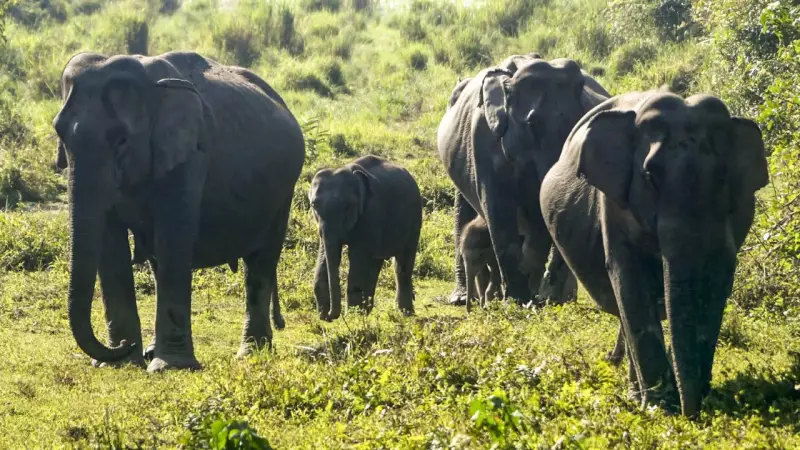
In a significant ruling favoring wildlife conservation, the Supreme Court of India has firmly stated that it will always lean towards protecting animals in the age-old conflict between human development and natural habitats. The court made this observation while hearing petitions from resort owners challenging their eviction from notified elephant corridors in Tamil Nadu's Nilgiris district.
Court's Stand on Silent Victims of Development
A bench comprising Chief Justice Surya Kant and Justices Joymalya Bagchi and Vipul M. Pancholi delivered a clear message on Friday. The justices emphasized that when there is any doubt, the benefit must go to the "silent victims" – the elephants and wild animals – whose migration paths are blocked by commercial tourism projects. The court was hearing appeals against a Madras High Court order that had approved the demolition of illegal constructions on the Sigur Plateau.
The Sigur Plateau Conflict: Facts and Figures
The legal battle stems from the Tamil Nadu government's notification of elephant corridors in the ecologically sensitive Sigur Plateau region. The issue reached the Supreme Court after the Nilgiris district collector reported over 800 constructions inside the corridor, including 39 resorts and 390 houses. Following this, authorities issued demolition notices to 35 resorts last year.

An expert committee headed by former judge K. Venkataraman, appointed by the Supreme Court itself, found that land purchased by private parties on these corridors was illegal. Consequently, it recommended that all constructions on these lands be dismantled. The Madras High Court upheld this recommendation in its order dated September 12.
Resort Owners' Plea and Court's Rebuttal
Senior advocates Salman Khurshid and Shoeb Alam, representing the resort owners, argued that their clients had purchased the properties much before the elephant corridors were officially notified. They pleaded that these businesses, which they claimed were eco-friendly, should be allowed to continue with a condition that they would not expand further.
The bench, however, was unequivocal in its response. It pointed to the committee's clear finding that all these establishments exist for commercial purposes on the elephant corridor and definitely interfere with the movement of elephants. Acknowledging a request from Advocate Alam, the court agreed to club together all related petitions, some of which are older, for a final hearing. The matter has been posted for January 5.
This ruling reinforces the judiciary's growing role in enforcing environmental laws and prioritizing habitat connectivity for endangered species like elephants, setting a precedent for similar conflicts across the country.

