Supreme Court Flags Need for Extraordinary Punitive Measures in Acid Attack Cases
Shaheen Malik does not call it a victory. When her petition came up before the Supreme Court on Tuesday, the Bench made observations that could reshape how acid attack cases are treated across India. The court flagged the urgent need for extraordinary punitive measures, questioned why the assets of convicted attackers cannot be seized and auctioned to compensate victims, and stated that a reformative approach has no place for such perpetrators.
Systemic Reforms and Legal Assistance
While stopping short of issuing binding directions, the court assured Malik legal assistance of her choice, urged high courts to fast-track trials, and sought detailed data from states on acid attack cases. However, for Malik, there is a long way to go. This is not closure or a win. For survivors, it is only a beginning, she told TOI on Friday.
A Life Unfolding in Hospitals and Courtrooms
In 2009, acid was thrown on Malik’s face outside her workplace in Panipat. Since then, her life has unfolded inside hospital wards, police stations, and courtrooms. She accused her employer’s wife and two students, one a juvenile, of carrying out the attack.

Earlier data submitted by 15 High Courts showed Uttar Pradesh with the highest number of pending acid attack cases at 198, followed by West Bengal with 160, Gujarat with 114, Bihar with 68, and Maharashtra with 58.
For Malik, these numbers only echo what her body has carried for years. For one second, I thought it was a prank, she recalled. Then the burning started. Her parents and brothers rushed to bring her back to Delhi, hoping she would be admitted immediately, but they were turned away. Hospitals initially refused to admit me unless we deposited lakhs of rupees, saying it was a criminal case, she told the court. Even after an FIR was registered, she said, nothing moved. Years passed… The case didn’t move.
Physical Devastation and Systemic Abandonment
What followed was not only physical devastation but systemic abandonment. Survival itself came at a cost that never stopped mounting. The corrosive liquid caused third-degree burns and permanent disfigurement, melting skin and facial tissue across nearly 90% of her face and parts of her body. Malik permanently lost vision in one eye. After more than two dozen reconstructive surgeries, her remaining eye still requires lifelong treatment and specialised cylindrical lenses.
In 2012, after writing to then Haryana Chief Minister Bhupinder Singh Hooda, she received Rs 3 lakh towards medical expenses. Malik said, Justice was never about the money. But the cost of surviving is crushing.
Years of Litigation and Acquittal
Years blurred into each other—endless travel, hospital visits followed by court dates, and a support system that slowly shrank. I lost friends, connections… everything.
Then came 2025. After more than 15 years of litigation, a Delhi court acquitted the three accused, citing lack of substantial evidence and serious gaps in the investigation. I was disfigured, visually impaired, mentally shattered—and the people responsible walked free. That moment became the trigger for her Public Interest Litigation in the Supreme Court. I woke up and decided, this needs a fight, Malik said. I could give up—or continue fighting for every woman facing injustice. She chose the latter not just for herself but to flag what she calls a structural failure.
Pleading for Expedited Justice
Malik spoke of time slipping away. Pleading for an expedited hearing, she told the court the violence does not end with the crime. It stretches across years of trauma, isolation, treatment, hearings, and waiting. I told the SC that the pain I carry, no one else should have to carry for this long. I have given this case sixteen years of my life. I cannot give another sixteen, she said.
Demand for Sensitisation with Consequences
If Malik has one demand, it is not sympathy but sensitisation with consequences. Her petition sought:

- Police training
- Time-bound investigations
- Fast-track courts
- Judicial sensitivity
- Stricter punishment
Acid violence comes from patriarchy, entitlement. When there is no fear, crimes continue, she emphasized.
Court's Crucial Suggestions
Like hundreds of hearings she has attended before, that Tuesday began with cautious hope. She reached early, even though her case was listed for the afternoon. When the order finally came, she wiped away a tear.
Malik believes the court’s suggestion to auction assets of convicted attackers is crucial. She said, Medical care for acid survivors is primary for their survival. No one should live wondering if better treatment could have saved their sight, face, or future.
Acid violence, she said, imposes lifelong financial, psychological, and social costs. If the crime is created by society, then society must step in—not through charity, but accountability.
Personal Struggles and Foundation Work
The violence stripped her of an ordinary future, with marriage out of the picture long ago. She lives alone, often wishing she had a companion. No one wants to accept you with this face… this disability. I have to live like this for the rest of my life.
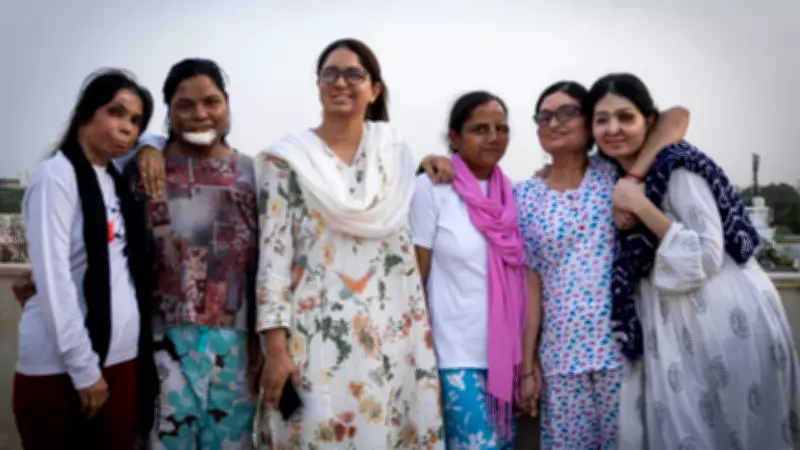
In 2021, Malik founded Brave Souls Foundation in Delhi, supporting over 300 acid attack survivors with medical aid, legal assistance, trauma counselling, and rehabilitation. But stigma remains. People don’t want to rent us houses, don’t want to give us jobs. They say our faces bring bad luck. The culprits, meanwhile, blend back into normal life.
Still, Malik says she has purpose. My work is my life’s goal. If I can ease someone else’s struggle, it’s enough. She hopes to be remembered not as a victim, but as proof that fighting yields something. This isn’t personal anymore, she concluded.