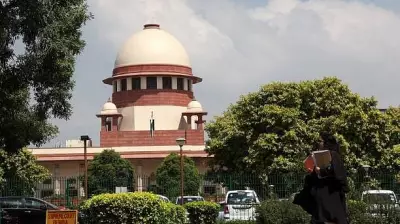
The Supreme Court of India delivered a significant ruling on Friday, emphasizing that the constitutional right to free speech is not absolute. The court denied anticipatory bail to a 24-year-old chartered accountancy student from Bengaluru, who is facing legal action for posts made from a parody account on social media platform X, formerly Twitter.
Court's Stern Stance on Abuse of Free Speech
A bench comprising Chief Justice Surya Kant and Justices Joymalya Bagchi and Vipul M Pancholi refused to grant pre-arrest relief to the student. The bench observed that the petitioner showed no sense of remorse or repentance for the abusive words used in the posts, which pertained to the Prime Minister and his mother. In a clear statement, the court declared, "People who abuse free speech cannot be extended discretionary relief by the courts."
The court dismissed the student's petition, which sought the quashing of a First Information Report (FIR) registered by the Ahmedabad police. It also refused his request for protection from arrest to enable him to join the investigation. However, the bench noted that the student could approach the Gujarat High Court for any relief.

Details of the Case and Police Action
The legal trouble began when an Ahmedabad resident filed a police complaint on November 7. The complaint alleged that the accused, operating under the parody account handle 'Jawaharlal Nehru Satire', had posted defamatory content aimed at harming the dignity and reputation of the PM and his mother, and tarnishing India's international image.
Following the complaint, an FIR was registered, and Ahmedabad police traveled to Bengaluru to question the student. The petitioner's counsel argued that his client had merely posed a question to an existing post he did not create and was now being accused of outraging a woman's modesty. The counsel alleged procedural lapses, stating the student was detained at a Bengaluru police station without due process and was now facing arrest threats despite being willing to cooperate.
The social media platform X has withheld the parody account in question after the FIR was registered.
Broader Implications for Online Speech
This ruling underscores the judiciary's current interpretation of the limits of free speech, particularly in the digital realm. The Supreme Court's decision highlights that while free speech is a fundamental right under Article 19 of the Constitution, it is subject to reasonable restrictions. The case sets a precedent that courts may be unwilling to shield individuals from arrest when they are perceived to have crossed the line into abuse, especially when the content targets individuals in high office or their families.
The incident has sparked discussions on the boundaries of satire and parody online versus the legal protections against defamation and disrespect. The student's fate now rests with the Gujarat High Court, where he must seek any further legal recourse.