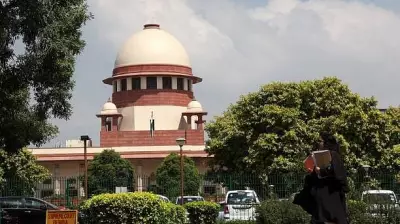
In a significant ruling underscoring the right to a speedy trial, the Supreme Court of India has ordered the release on bail of a man accused under the stringent Unlawful Activities (Prevention) Act (UAPA). The court strongly criticized the investigative agencies for keeping the accused in custody for nearly two years without filing a chargesheet.
Court Condemns "Absolutely Unjustified" Prolonged Detention
A bench comprising Justices Vikram Nath and Sandeep Mehta delivered the verdict on December 6, 2025. The justices explicitly stated that the custody of the petitioner for such a prolonged period without the chargesheet being filed was “absolutely unjustified”. This observation formed the core of their decision to grant bail.
The court held that the accused deserved the indulgence of bail primarily on two grounds: first, the chargesheet was not filed for almost two years from the date of his arrest in July 2023, and second, there is no immediate prospect of an early conclusion of the trial. The bench emphasized that the statutory safeguards against indefinite detention must be respected.
Background of the UAPA and Extortion Case
The case originated from events in 2023. A complaint alleged that individuals linked to the banned United Liberation Front of Assam (ULFA-Independent) were demanding extortion money at a rate of Rs 1 lakh per year from various tea gardens in Assam.
The accused was apprehended by the Assam Rifles on July 23, 2023. He was allegedly caught carrying extortion money amounting to Rs 3.25 lakhs. Following his arrest, a First Information Report (FIR) was registered. The charges included offences under Sections 384 (extortion) and 107 (abetment) of the Indian Penal Code (IPC), read with Sections 10(a)(iii) and (iv) of the UAPA, which pertain to being a member of an unlawful association.
Accused Had Secured Default Bail in a Parallel Case
During the proceedings, additional documents presented on behalf of the accused revealed a critical detail. The accused had already been granted default bail in a separate FIR for a similar offence. In that case, default bail was granted because the investigating agency failed to file a chargesheet within the legally permitted timeframe for concluding the investigation.
This fact further bolstered the argument that the prolonged detention in the present case, without a formal chargesheet, was untenable. The Supreme Court's decision aligns with a growing judicial trend of scrutinizing the application of stringent laws like the UAPA to ensure they are not used to deny basic procedural rights.
Implications of the Supreme Court's Ruling
The order has immediate and broader implications. For the accused, it means release from custody after two years, pending trial. On a larger scale, the verdict serves as a stern reminder to investigating agencies about the importance of timely filing of chargesheets, even in complex cases under special laws.
The court's firm language condemning the delay reinforces the principle that investigation must be swift and custody cannot be indefinite. It underscores that the seriousness of the charges under acts like the UAPA does not negate the fundamental rights of the accused, including the right to a speedy trial and protection from arbitrary detention.
The Supreme Court, after considering all arguments, found merit in the plea for bail and consequently ordered his release on bail, subject to conditions that the trial court may deem fit to impose.