Supreme Court Grants Bail to All Three Accused in Pune Porsche Crash Case
The Supreme Court of India has granted regular bail to all three accused individuals involved in the high-profile Pune Porsche crash case, marking a significant development nearly two years after the tragic accident that claimed the lives of two young technology professionals in Kalyaninagar. This decision comes after a prolonged legal battle that has captured national attention and sparked debates about juvenile justice and parental responsibility.
Court Criticizes Parental Control and Substance Abuse
A bench comprising Justices BV Nagarathna and Ujjal Bhuyan delivered the verdict, making strong observations about the role of parents in controlling their children. The court explicitly stated that while substance abuse is a serious concern, providing car keys and funds for reckless enjoyment to minors is utterly unacceptable. This remark underscores the judiciary's concern over parental negligence in cases involving affluent youth and dangerous behavior.
Background of the Fatal Accident and Legal Proceedings
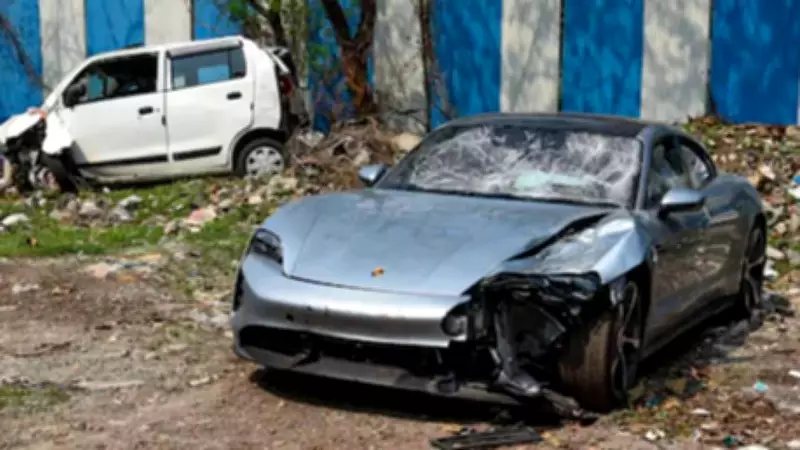
The incident dates back to May 19, 2024, when a Porsche, allegedly driven by a 17-year-old boy under the influence of alcohol, fatally struck two IT professionals in Pune's Kalyani Nagar area. The tragedy led to immediate public outrage and a complex investigation that uncovered multiple layers of alleged misconduct.
On January 23, the Supreme Court sought a response from the Maharashtra government regarding a bail plea filed by accused Amar Santish Gaikwad, who was represented by advocate Sana Raees Khan. Gaikwad was alleged to have acted as a middleman, offering Rs 3 lakh to a hospital doctor's assistant to replace the blood sample of the juvenile accused, thereby attempting to manipulate evidence.
Details of the Accused and Bail Rejections
Subsequently, on January 7, the top court also sought responses from the state government on bail pleas filed by two other accused: Aditya Avinash Sood (52) and Ashish Satish Mittal (37). These individuals were represented by senior advocates Siddharth Dave and Siddharth Agarwal. They were arrested on August 19 last year after it was discovered that their blood samples were used in tests related to two minors who were present in the car alongside the main juvenile accused during the accident.
The Bombay High Court had previously rejected the bail pleas of eight accused, including Gaikwad, Sood, and Mittal, on December 16 last year, highlighting the seriousness with which the judiciary initially viewed the case.
Controversial Juvenile Justice Board Decisions
The Juvenile Justice Board (JJB) initially granted bail to the minor accused on lenient terms, which included writing a 300-word essay on road safety. This decision triggered nationwide outrage, leading the Pune police to approach the JJB for a review. In response, the board modified its order and sent the juvenile to an observation home. However, in June, the high court ordered the release of the juvenile, adding another layer of controversy to the proceedings.
Wider Implications and Ongoing Legal Actions
While the juvenile involved has been released from the observation home, ten other individuals, including the parents of the juvenile (Vishal Agarwal and Shivani Agarwal), doctors Ajay Tawre and Shreehari Halnor, Sassoon Hospital staffer Atul Ghatkamble, Aditya Avinash Sood, Ashish Mittal, Arun Kumar Singh, and two middlemen, remain in jail in connection with the blood sample swapping case. This highlights the extensive legal ramifications and the multiple parties implicated in the aftermath of the accident.
The Supreme Court's decision to grant bail to the three accused reflects a nuanced approach to justice, balancing legal procedures with societal concerns over youth behavior and parental accountability. As the case continues to unfold, it serves as a stark reminder of the consequences of reckless driving and the complexities of India's legal system in handling such sensitive matters.