The Supreme Court of India has granted interim bail to businessman Kailash Ramchandani, who stands accused in the devastating 2019 Gadchiroli blast case. The decision, delivered on Tuesday, comes after Ramchandani spent over six years in judicial custody.
Court Cites Inordinate Trial Delay
A bench comprising Chief Justice Surya Kant and Justice Joymalya Bagchi was swayed by the argument presented by Ramchandani's legal team regarding the exceptionally slow pace of the trial. The lawyers informed the court that the National Investigation Agency (NIA) plans to examine a total of 146 witnesses in the case. Shockingly, only one witness has been examined in the years since the investigation began.
The bench observed that given these circumstances, the conclusion of the trial would take a reasonably long time. The court clarified that its order was not a comment on the merits of the case but was based on the principle of personal liberty in the face of a protracted trial. The judges noted that the petitioner had no other criminal antecedents.

Strict Conditions for Bail
The apex court did not grant bail unconditionally. It imposed a stringent set of terms that Ramchandani must adhere to, with a clear warning of cancellation for any violation. The conditions include:
- Ramchandani cannot leave his native place without prior permission from the trial court, except for attending court hearings.
- He must report regularly to the local police station in Gadchiroli.
- He is forbidden from delaying the trial proceedings in any manner.
- He must not make any direct or indirect attempt to contact witnesses in the case.
The bench explicitly stated that if Ramchandani is found violating any conditions or attempting to re-establish alleged contact with co-accused or their organisations, the bail will be revoked immediately.
Background of the Gadchiroli Blast Case
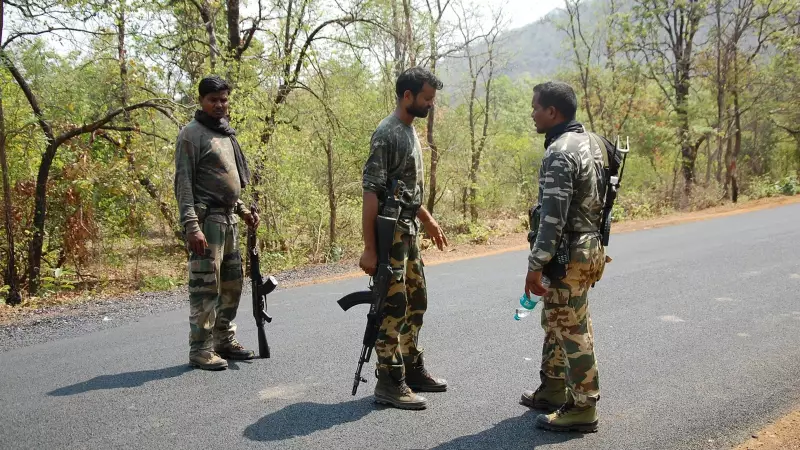
The case pertains to a tragic incident on May 1, 2019, when an explosion in Gadchiroli, Maharashtra, claimed the lives of 15 security personnel from the Quick Response Team and one civilian. The NIA took over the investigation, alleging that the conspiracy was planned by members of the banned CPI(Maoist).
The agency arrested nine individuals, including Kailash Ramchandani, who was taken into custody on June 29, 2019. The accused were charged under the stringent Unlawful Activities (Prevention) Act (UAPA) and the Maharashtra Control of Organised Crime Act (MCOCA). The accused were later moved to a Mumbai jail after the case was transferred to a special NIA court in the city.
In a related legal battle, the accused had previously challenged the application of MCOCA in this case. The Bombay High Court had allowed their plea, but the Supreme Court set aside that order in January 2025. Following that, charges were formally framed against the accused, including Sathyanarayana Rani, Parasram Maniram Tulavi, Somsay Dalasay Madavi, Kisan Sitaram Hidami, Dilip Hidami, Sukharu Gota, Dinkar Gota, and Kailash Ramchandani. With the exception of Sathyanarayana Rani, all other accused remain behind bars.