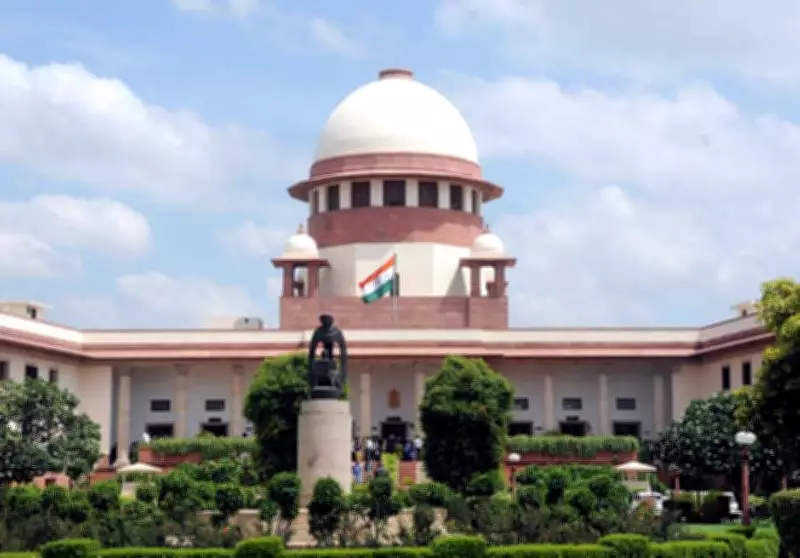
The Supreme Court of India on Monday commenced the hearing of a petition filed by the Trinamool Congress (TMC) challenging the Election Commission's (EC) directive that permits the presence of counting supervisors during the vote counting process in West Bengal. The TMC has argued that this order undermines the secrecy of voting and could lead to manipulation of results.
Background of the Case
The Election Commission had issued an order allowing candidates or their agents to appoint counting supervisors to oversee the counting of votes. The TMC contends that this provision is unconstitutional and violates Section 128 of the Representation of the People Act, which mandates the secrecy of voting. The party further alleges that the EC's decision is arbitrary and could be misused to influence the outcome in favor of rival parties.
TMC's Arguments
Senior advocate Abhishek Singhvi, representing the TMC, submitted before a bench led by Chief Justice of India D.Y. Chandrachud that the EC's order effectively allows unauthorized persons to access the counting hall, thereby compromising the integrity of the process. He emphasized that the presence of supervisors could lead to coercion and intimidation of counting staff. Singhvi also pointed out that similar orders have been challenged in other states, and the court should stay the EC's directive pending a final decision.

Election Commission's Stand
The Election Commission, represented by Additional Solicitor General K.M. Nataraj, defended its order, stating that counting supervisors are essential to ensure transparency and avoid disputes. Nataraj argued that the provision does not violate secrecy as supervisors are bound by confidentiality and are only permitted to observe the process without interfering. The EC also highlighted that such arrangements have been in place in previous elections without any complaints.
Court's Observations
The Supreme Court bench, while hearing the matter, observed that the issue involves a balance between transparency and secrecy. The court asked the EC to explain how the presence of supervisors would not affect the secrecy of voting. The bench also noted that the matter requires careful consideration and scheduled the next hearing for later this week. The court has not yet issued any interim order, and the EC's directive remains in effect for the ongoing counting process.
Political Implications
The TMC's plea comes amid a heated political climate in West Bengal, where the ruling party has frequently clashed with the Election Commission over alleged bias. The outcome of this case could have significant implications for the counting process in the state and potentially set a precedent for other states. Political analysts believe that the Supreme Court's decision will be crucial in determining the fairness of the electoral process in the region.
The hearing continues, and the nation awaits the court's verdict on this contentious issue.