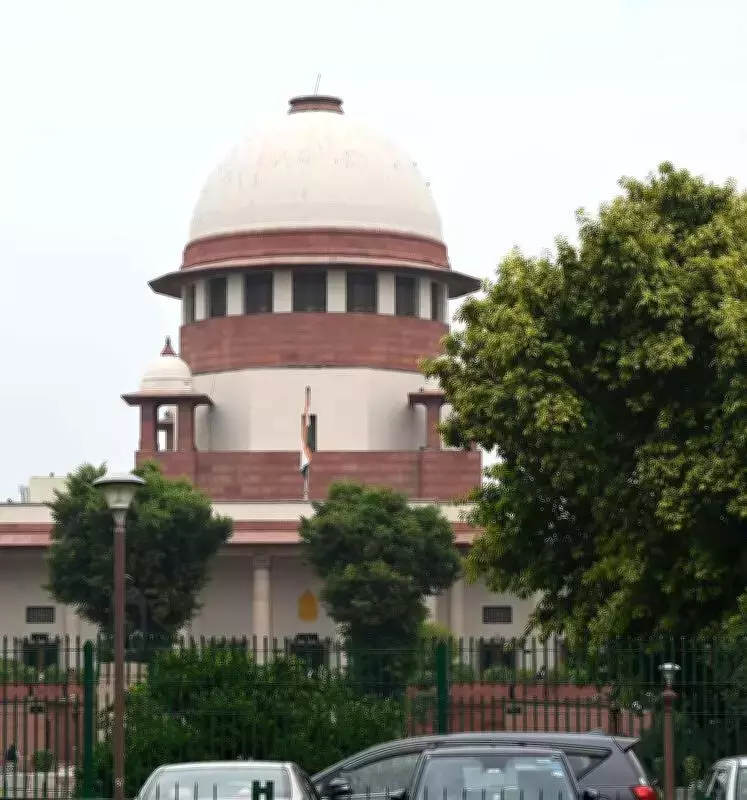
Supreme Court Justice Urges Law Students to Prioritize Human Intelligence Over AI
In a significant address at the 22nd K K Luthra Memorial Moot Court Competition prize distribution ceremony, Justice B V Nagarathna of the Supreme Court delivered a powerful message to aspiring legal professionals. The event, held at the India Habitat Centre in New Delhi on Sunday, saw the justice emphasizing that students of law must rely on natural human intelligence and legal reasoning rather than blindly depending on artificial intelligence tools.
Bridging the Gap Between Theory and Practice
As the chief guest of the ceremony, Justice Nagarathna lauded the initiative for its role in equipping students with practical courtroom experience and effectively bridging the gap between theoretical learning and real-world practice. A moot court simulates actual legal proceedings where law students argue hypothetical cases, providing invaluable hands-on training that academic learning alone cannot offer.
The competition, organized by the Campus Law Centre of the University of Delhi in association with the Nirmal Luthra Foundation, witnessed substantial participation from 138 institutes across India and internationally. Seventy-two teams advanced to the final rounds, with Symbiosis Law School, Noida securing the first prize of Rs 30,000 and Lloyd Law College finishing as runners-up.
Guests of Honor and Competition Significance
The event also featured distinguished guests of honor including Justices Anup Jairam Bhambhani, Manmeet Pritam Singh Arora, and Sanjeev Narula from the Delhi High Court. Congratulating the Luthra family on completing 22 years of the competition held in memory of senior advocate K K Luthra, Justice Nagarathna underscored the critical importance of mooting activities in legal education.
She noted that academic learning alone is insufficient in the legal profession, and moots help significantly in sharpening essential skills including advocacy, research, and articulation. These practical exercises prepare students for the complexities and demands of actual legal practice beyond textbook knowledge.
Addressing AI in Legal Contexts
Addressing the specific theme of this year's moot proposition — criminal liability arising from interference of AI-enabled medical technology — Justice Nagarathna acknowledged the technological advantages artificial intelligence brings to various fields. However, she issued a clear caution against uncritical reliance on AI systems, particularly in light of recent instances where fake citations generated by AI have appeared in courtroom documents.
The justice emphasized that while technology can assist legal professionals, it should not replace the fundamental human elements of judgment, ethical reasoning, and contextual understanding that are essential to justice administration.
Encouraging Pro Bono Work
Beyond the discussion of technology, Justice Nagarathna encouraged young lawyers and law students to actively engage in pro bono work — legal aid provided voluntarily and without payment to underserved individuals, organizations, or causes. She highlighted that such work may not provide immediate financial rewards or widespread recognition, but it offers invaluable practical experience and contributes to social justice.
Pro bono service helps bridge access to justice gaps while allowing emerging legal professionals to develop their skills in diverse, real-world scenarios that classroom education cannot replicate.
The justice's remarks come at a time when legal education globally is grappling with how to integrate technological advancements while preserving the core human elements of legal practice. Her guidance serves as a timely reminder for the next generation of lawyers to balance technological tools with traditional legal skills and ethical considerations.