

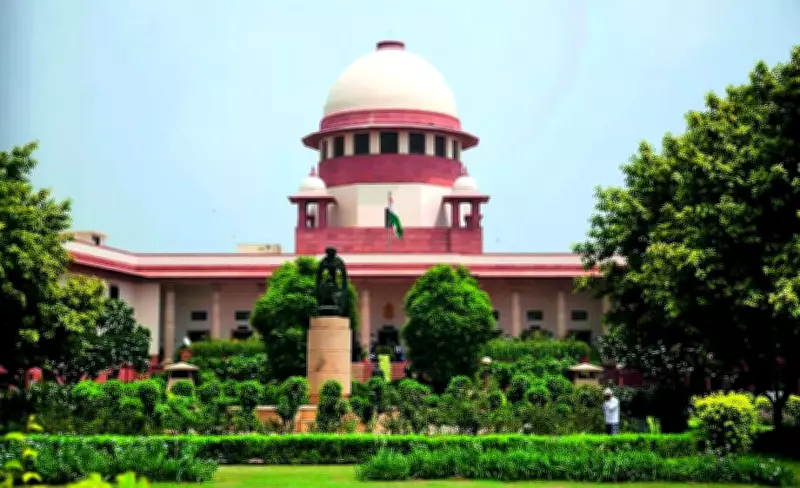
The Supreme Court on Thursday ruled that a long-standing employee cannot be dismissed from service for indiscipline, insubordination, or disobedience, stating that such a penalty must be reserved for cases of corruption, moral turpitude, or mala fide actions causing loss to the employer.
A bench of Justices Sanjay Karol and N K Singh emphasized that while discipline at the workplace is important, in the absence of corruption, illegal gratification, moral turpitude, misappropriation of funds, proved losses to employer, public scandal, or conduct bringing the organisation to disrepute, an employee cannot be visited with the extreme penalty of dismissal.
“The punishment must bear a reasonable relationship with the gravity of the misconduct, the past service record, the surrounding circumstances and the impact of the misconduct on the establishment,” the bench said.

Rescinding the 2017 order that fired an employee of Maharashtra State Electricity Distribution Company Ltd, the Supreme Court pointed out that a dismissal permanently severs the employee-employer relationship and deprives the employee of their retirement benefits.
“It does not lead merely to the loss of the existing source of income for the employee but also for the dependent family members,” the court added.
Justice Singh noted that being fired leaves a “permanent stigma” on a person’s service record and may impair future employment prospects, “particularly in public employment, statutory bodies, public sector undertakings and other regulated establishments where antecedents and service record are material.”
“For this reason, dismissal must remain reserved for cases where the misconduct is of the most serious nature where elements of sympathetic consideration would be undesirable and inappropriate,” Justice Singh said.
Considering the 21 years of service rendered by the employee, who is now past retirement age, the bench directed the authorities to reconsider the nature of the penalty that ought to be imposed on her for the alleged indiscipline, insubordination, disobedience, and destruction of official documents.






