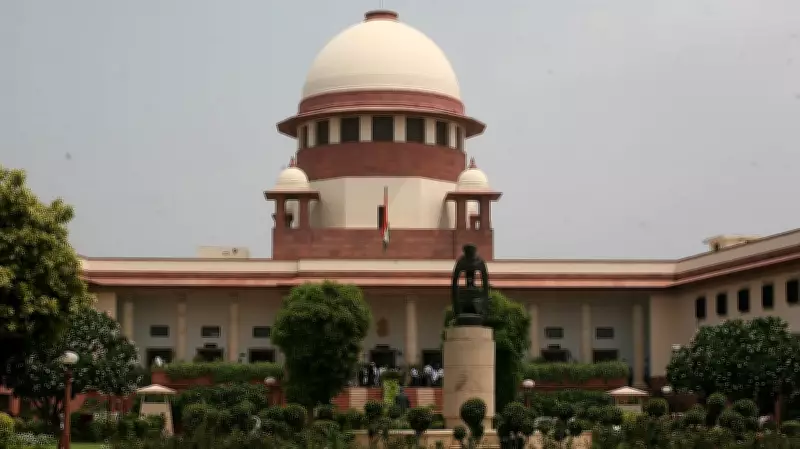
Supreme Court Elevates Menstrual Health to Fundamental Right Status
In a landmark judgment with far-reaching implications for women's welfare in India, the Supreme Court has unequivocally declared the right to menstrual health a fundamental right under the Constitution. This historic ruling, delivered on January 30, 2026, establishes a new legal benchmark for gender equality and public health policy in the country.
Court Mandates Free Sanitary Pads for All Schoolgirls
A bench comprising Justices J B Pardiwala and R Mahadevan issued sweeping directives aimed at safeguarding the dignity and health of female students across the nation. The court has ordered all states and Union Territories to ensure the provision of free sanitary pads to schoolgirls. This mandate is designed to combat period poverty, reduce school absenteeism among girls, and promote menstrual hygiene awareness from a young age.
Comprehensive Toilet Infrastructure Orders for Schools
Beyond the provision of sanitary products, the Supreme Court bench laid down stringent requirements for school infrastructure to support menstrual health. The justices directed all educational institutions to maintain separate toilets for female and male students, addressing a critical gap in privacy and safety. Furthermore, the order stipulates that all schools, whether state-run or privately controlled, must provide disabled-friendly toilet facilities, ensuring inclusivity for students with special needs.
This comprehensive framework underscores the court's holistic approach to menstrual health, linking it directly to educational access and infrastructure development.
Legal and Social Implications of the Ruling
The judgment interprets menstrual health as an integral component of the right to life and personal liberty under Article 21 of the Constitution, as well as the right to equality under Article 14. By framing it as a fundamental right, the Supreme Court has empowered citizens to seek legal recourse for violations, potentially triggering a wave of policy reforms and budgetary allocations at both central and state levels.
The court's directives are expected to catalyze significant changes in school administration, public health campaigns, and gender-sensitive planning across India's diverse educational landscape.
Implementation Challenges and the Path Forward
While the ruling has been widely hailed by activists and health experts, its successful implementation will require coordinated efforts between multiple stakeholders. Key challenges include:
- Ensuring consistent supply chains for sanitary pads in remote and rural areas.
- Allocating sufficient funds for toilet construction and maintenance in under-resourced schools.
- Training school staff and students on menstrual hygiene management and destigmatizing periods.
- Monitoring compliance across thousands of schools nationwide to prevent gaps in execution.
The Supreme Court's judgment marks a pivotal moment in India's journey toward gender justice, setting a precedent that could influence similar initiatives in other sectors of public health and education.