Supreme Court's Landmark Hearing on 'Industry' Definition Under Industrial Disputes Act
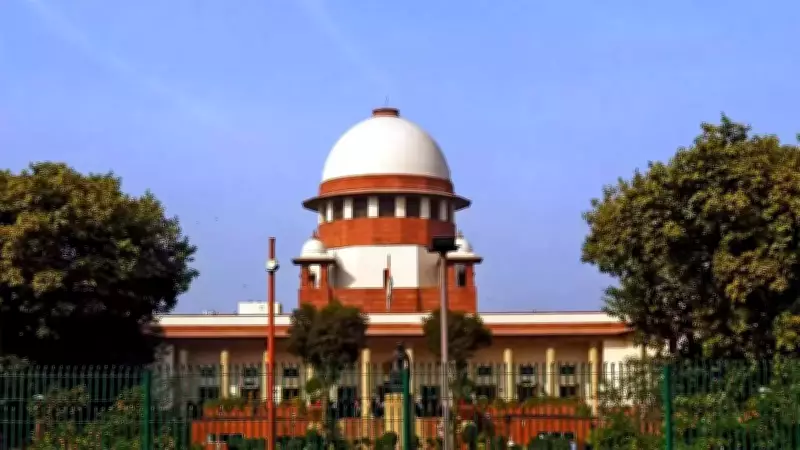
A pivotal legal review is set to unfold as a nine-judge bench of the Supreme Court of India, led by Chief Justice Surya Kant, will convene on March 17 and 18 to examine the correctness of the expansive definition of 'industry' established nearly 50 years ago. This definition, originally laid down by a seven-judge bench in 1978, has brought institutions such as universities, hospitals, government bodies, and welfare organizations under the ambit of the Industrial Disputes (ID) Act, which regulates worker-employer relations.
Historical Context and Pending Petitions
The issue has been pending since 2002, with a seven-judge Supreme Court bench referring it to a nine-judge bench on January 2, 2017. The core question revolves around the validity of the triple test established by Justice Krishna Iyer in the 1978 Bangalore Water Supply case ruling. This test includes systematic activity, organized cooperation between employer and employee, and the production or distribution of goods and services to satisfy human needs, effectively encompassing a wide range of activities under the ID Act.
Scope of the Upcoming Hearing
In a recent directive, a bench comprising CJI Surya Kant and Justices Joymalya Bagchi and Vipul M Pancholi emphasized that the nine-judge bench will not only test the correctness of the 1978 ruling but also consider the interpretation of 'industry' as defined in Section 2(j) of the ID Act. This section defines 'industry' as any business, trade, undertaking, manufacture, or calling of employers, and includes various forms of employment and occupations of workmen.
The court had previously excluded sovereign functions, such as defense and law enforcement, from the definition of 'industry'. However, the upcoming hearing will delve into which state activities should fall outside the scope of Section 2(j), addressing long-standing ambiguities in labor law.
Hearing Schedule and Legal Representation
The bench has instructed counsel to strictly adhere to a nine-hour hearing schedule spread over the two days. Solicitor General Tushar Mehta and other law officers will be allocated four hours for arguments, while opposing parties, including those contesting the Union government's stance, will also receive four hours. This structured approach aims to ensure a comprehensive and efficient examination of the complex legal issues at hand.
This hearing marks a significant moment in Indian jurisprudence, potentially reshaping the application of labor laws across various sectors and impacting millions of workers and institutions nationwide.