

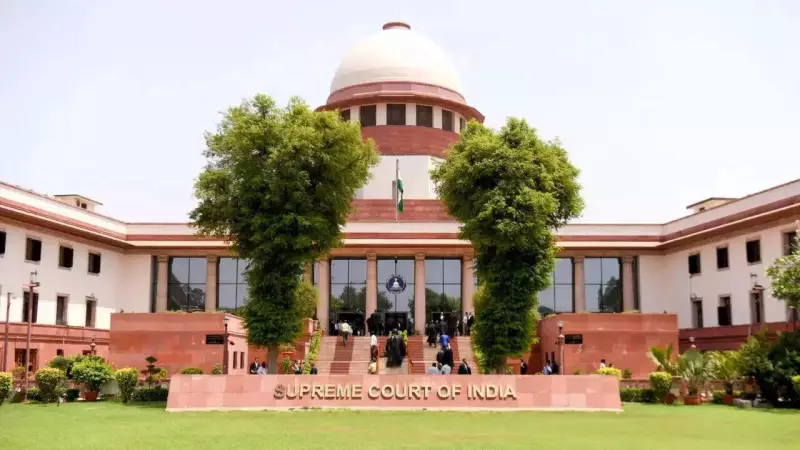
In a landmark ruling that reinforces the independence of the judiciary, the Supreme Court of India has unequivocally stated that disciplinary proceedings cannot be initiated against a judge merely for an error of judgment. The apex court's decision came on Monday while reinstating a trial court judge from Madhya Pradesh whose services were terminated by the High Court over a bail order.
A Fearless Judge is the Bedrock
A bench comprising Justices J B Pardiwala and K V Viswanathan emphasized that the cornerstone of a robust judicial system is a fearless judge. The court observed that an independent judiciary, which itself is the foundation of the rule of law, cannot function if judges work under the constant threat of frivolous complaints and inquiries.
The bench was hearing the case of a judicial officer from Madhya Pradesh who was dismissed after being accused of an error in granting bail to an accused. Quashing the High Court's termination order, the Supreme Court directed the officer's reinstatement with full back wages. The court clarified that the determinative factor in such proceedings should be the conduct of the officer, not the correctness of the verdict.

Frivolous Complaints and Their Chilling Effect
Justice K V Viswanathan, who authored the judgment, expressed deep concern over the rising trend of motivated complaints against members of the judiciary. He noted that trial court judges, facing tremendous work pressure, often decide against one party, leading to disgruntlement. "Disgruntled elements... wanting to settle scores, may raise frivolous allegations," the judgment stated.
The court warned that launching inquiries based on ill-conceived complaints seriously impacts the functioning of the trial judiciary. "Fearless discharge of duties would become a casualty," it said, pointing out that a wrong decision can be a bona fide error and does not imply dishonesty. The integrity of a judge, the bench asserted, cannot be questioned solely because an order is erroneous.
Bail Discretion and Judicial Reluctance
In a significant observation linked to the case, Justice J B Pardiwala connected the fear of departmental proceedings to the growing reluctance among trial court judges to grant bail. He stated that this "lurking fear" of administrative action is a primary reason judges shirk from exercising their discretion in bail matters, even in deserving cases.
This reluctance, he noted, results in High Courts and the Supreme Court being flooded with bail petitions. "Over a period of time, the trial court judges have exhibited tendency to shirk from their solemn judicial function... when it comes to exercising discretion in matters relating to bail," Justice Pardiwala remarked.
The Supreme Court laid down a clear mandate for High Courts, which exercise supervisory control. While they must immediately intervene to "weed out black sheep" when allegations are true, they must also act as a shield and defend judges facing false and anonymous complaints. This balance, the court concluded, is essential to preserve judicial independence and the rule of law.






