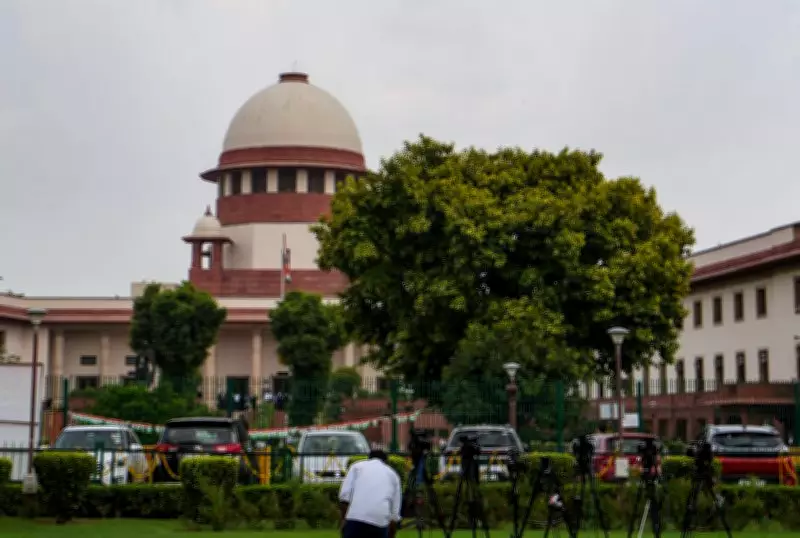
The Supreme Court on Tuesday strongly rebuked the Uttar Pradesh Police for referring to protesters in Noida as 'terrorists' and directed the state police to produce two arrested men before the court on May 18. The bench, comprising Justices Sanjay Kishan Kaul and Sudhanshu Dhulia, made it clear that the right to peaceful protest is a fundamental right and cannot be equated with terrorism.
Court's Strong Observations
During the hearing, the court observed that labeling protesters as terrorists is a serious matter and undermines the constitutional guarantees. 'Protesters are not terrorists. You cannot call every protester a terrorist. That is a very serious allegation,' the bench remarked. The court also questioned the police's action of booking the accused under the Unlawful Activities (Prevention) Act (UAPA), stating that such stringent laws should not be invoked casually.
Background of the Case
The case pertains to the arrest of two individuals, Jatin and Bhola, who were allegedly involved in protests against the demolition of a mosque in Noida's Sector 20 area. The protests, which took place in March 2023, turned violent, leading to several arrests. The police had charged the duo under UAPA and other sections, claiming they were part of a larger conspiracy. However, the Supreme Court found the charges to be disproportionate.

Court's Directions
The court directed the UP Police to produce Jatin and Bhola before the court on May 18 through video conferencing. It also asked the state government to file a detailed affidavit explaining the basis for invoking UAPA. 'We want to see the material on which the police have relied to label these men as terrorists,' the bench said. The court further noted that the right to protest is a fundamental right under Article 19 of the Constitution, and any curtailment must be reasonable and proportionate.
Implications for Police Actions
The Supreme Court's intervention is seen as a significant check on the misuse of anti-terror laws by state police. Legal experts say that the ruling reinforces the principle that dissent and protest are not crimes. 'The court has sent a clear message that the police cannot use draconian laws to silence peaceful protesters,' said senior advocate Prashant Bhushan. The case is expected to set a precedent for how future protests are handled by law enforcement agencies.
Reactions from Various Quarters
The order has been welcomed by civil rights activists and opposition parties, who have accused the Uttar Pradesh government of suppressing dissent. 'This is a victory for democracy. The Supreme Court has upheld the right to protest,' said Congress spokesperson Pawan Khera. However, the UP Police maintained that their actions were justified given the violence during the protests. The court will continue hearing the matter on May 18.