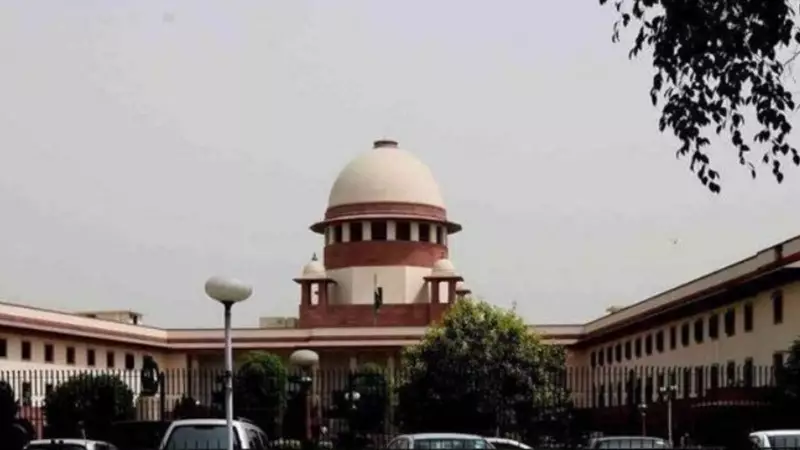
The Supreme Court of India on Thursday voiced profound dismay and termed it a "shame on the system" over the inordinate delay in concluding the trial of a 2009 acid attack case, which has been dragging on for 16 years. A bench headed by Chief Justice Surya Kant and comprising Justice Joymalya Bagchi was hearing a Public Interest Litigation (PIL) concerning the plight of acid attack survivors.
Court's Stern Rebuke and Nationwide Data Call
Expressing deep alarm at the protracted proceedings, CJI Surya Kant pointedly questioned why the trial from 2009 remained unconcluded. "This trial must be held every day. What's happening? [If] the national capital can't respond to these challenges, then who will do it? Shame on the system," the bench remarked. The court has now issued a directive to the Registrar Generals of all High Courts across the country, ordering them to furnish detailed data regarding the number of pending trials in acid attack cases within their respective jurisdictions.
During the hearing, the victim in the specific case apprised the court that virtually no progress occurred in her case until 2013. She informed the bench that the trial was later reopened by a judge and subsequently transferred from Haryana to Delhi. When queried about its current status, she revealed that the case is still pending before a Rohini court and has only reached the stage of final arguments.
Push for Legal Amendments and Special Status
In a significant development, the Supreme Court asked Solicitor General Tushar Mehta, who was present in court, to seek instructions from the government on whether necessary amendments can be introduced to bring acid attack victims under the protective umbrella of the Rights of Persons with Disabilities Act, 2016. SG Mehta concurred with the proposition, stating that victims of such heinous attacks should be recognized and treated as persons with disabilities. "Under this Act, they will have to be covered," he asserted.
Mehta further assured the court that if a judicial interpretation was not feasible, he would ensure the law is amended accordingly. The bench also urged the Solicitor General to explore if affirmative action could be taken by the government, including the establishment of special courts to exclusively try acid attack cases. Agreeing, SG Mehta emphasized that such trials must be conducted on a day-to-day basis without unnecessary adjournments, and the offenders "must be met with the same ruthlessness with which they commit this offence."
Victim's Ordeal and Broader Implications
The victim also highlighted the inadequacy of the compensation she has received, describing it as minimal. She brought to light the often-overlooked suffering of survivors who are forced to ingest acid, causing severe internal injuries. While their facial scars may not be visible, they endure lifelong distress and have to depend on artificial food pipes after their digestive tracts are burned by the corrosive substance.
The Supreme Court's strong stance underscores a critical judicial push to address systemic failures in delivering timely justice to survivors of gender-based violence. By seeking nationwide data and advocating for legal reforms, the court aims to catalyze a more robust and sensitive institutional response. "No court must have any sympathy for this person. System must respond," CJI Surya Kant concluded, sending a clear message to the judicial machinery.