

Supreme Court Stresses Uniform Civil Code for Women's Equality, Raises Implementation Questions
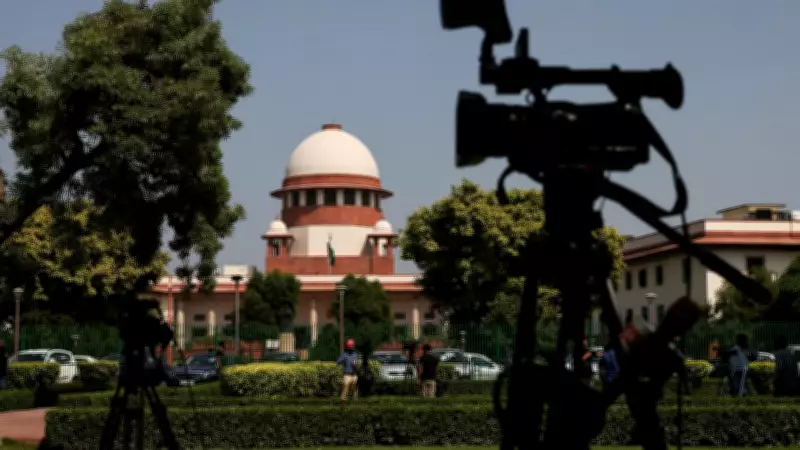
The Supreme Court of India, in a significant hearing on Tuesday, underscored the critical need for a Uniform Civil Code (UCC) to guarantee equal rights for all women across the nation. A bench comprising Chief Justice Surya Kant, Justice R Mahadevan, and Justice Joymala Bagchi articulated this stance while deliberating on a petition that advocates for equal inheritance rights for Muslim women.
Bench Highlights Disparities in Muslim Society and Legal Framework
The bench pointed out that a substantial segment of the Muslim community currently lacks equal inheritance rights under existing laws. However, it raised a pivotal question: if the inheritance provisions of Sharia Law were to be invalidated, what alternative legal framework would govern inheritance matters? This inquiry reflects the court's deep engagement with the complexities of harmonizing personal laws with constitutional principles of equality.
The justices further noted the presence of numerous asymmetries within various societal groups, including tribal communities. They posed a thought-provoking query: "Can these be struck down by the Supreme Court?" This highlights the judiciary's cautious approach in navigating the delicate balance between legal reform and cultural diversity.

Court Questions Achievement of Monogamy and Polygamy Regulations
In a related discussion, the bench scrutinized the broader goal of equality in marital practices. It questioned whether the ideal of "one man-one woman," or monogamous marriage, has been fully realized in India. The court asked, "Can the Supreme Court strike down all polygamous marriages in the country?" This remark underscores the challenges in enforcing uniform marital norms across diverse religious and cultural landscapes.
The hearing has sparked renewed debate on the implementation of a Uniform Civil Code, which aims to replace personal laws based on religious scriptures with a common set of rules governing all citizens. Proponents argue that such a code is essential for ensuring gender justice and national integration, while critics caution against potential conflicts with religious freedoms and traditions.
This development comes amid ongoing national discussions on legal reforms to promote women's rights. The Supreme Court's remarks are expected to influence future legislative and judicial actions concerning personal laws and gender equality in India.






