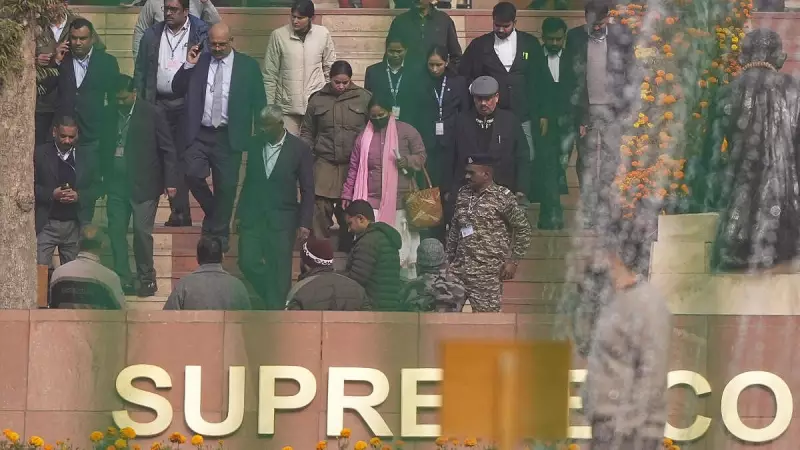
The Supreme Court of India has issued a strong defense of High Court judges involved in the Unnao rape case proceedings, while sternly cautioning against attempts to derive political mileage from the allegations. The apex court's remarks came during a hearing on Monday, December 29, 2025.
Bench's Frank Defense of Judiciary
A two-judge bench comprising Justices J K Maheshwari and Augustine George Masih made their position unequivocally clear. Justice Maheshwari, speaking for the bench, stated very frankly that the judges in question are among the finest members of the judiciary. This direct endorsement aimed to quell what the court perceives as unfounded criticism targeting the judicial officers handling the sensitive case.
Allegations and the Warning Against Politicization
The hearing addressed specific allegations leveled against certain High Court judges connected to the Unnao rape case. The Supreme Court bench observed that it appeared some parties were attempting to take political advantage of the situation. The court underscored the importance of maintaining the integrity of the judicial process and insulating it from external, politically motivated pressures.

By highlighting the exemplary record of the judges, the Supreme Court sought to reinforce public confidence in the judiciary's handling of the high-profile matter. The bench's intervention signifies a proactive step to prevent the legal proceedings from being overshadowed or manipulated by partisan interests.
Context and Implications
The Unnao rape case, which has been a focal point of national attention, involves serious charges and has seen multiple legal twists. The Supreme Court's latest comments serve a dual purpose: to shield the judicial officers from unfair attacks and to ensure the case is tried strictly on its legal merits, free from political theater.
The court's firm stance on December 29, 2025, sends a powerful message about the boundaries of legitimate criticism and the perils of politicizing judicial functions. It reiterates the principle that the judiciary must remain independent and its officers should be able to perform their duties without fear of being dragged into political controversies.