

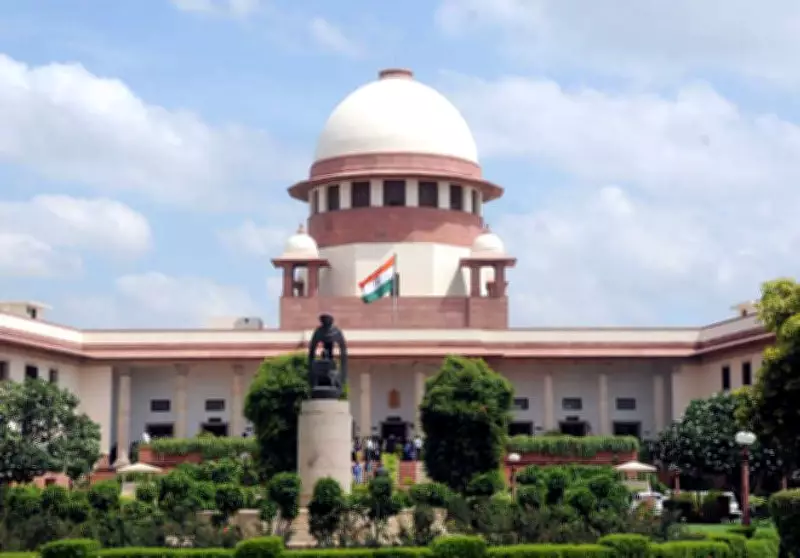
The Supreme Court of India has ruled that the Official Secrets Act, 1923, does not prohibit the supply of documents relied upon in the charge sheet to the accused. In a significant judgment, the court ordered that typed copies of certain highly confidential documents be provided within two months to retired Major General VK Singh, who is facing prosecution in a 19-year-old case.
Background of the Case
The Central Bureau of Investigation (CBI) registered a case against Singh in September 2007 based on a complaint accusing him of revealing secret information in his book titled 'India's External Intelligence Secrets of Research and Analysis Wing'. Singh, a former official of the Research and Analysis Wing (RAW), has been fighting the case, arguing that denial of access to documents relied upon by the prosecution violates his right to a fair trial.
Supreme Court's Observations
Setting aside the Delhi High Court's order of September 19, 2025, a Bench comprising Justice J K Maheshwari and Justice AS Chandurkar held that withholding documents from the accused deprives them of a valuable right to defend themselves. The Bench stated in its May 18 order: 'In light of this, we are of firm opinion that the supply of documents cannot be denied to the Appellants merely on the ground that provisions of the OSA have been invoked against him... Being part of the charge sheet and being used against, the said documents ought to be supplied to the appellant (Singh).'

The court further noted that the CBI did not claim that the documents sought by Singh were irrelevant to the trial. The only objection raised by the prosecution was that the documents were highly confidential and, if supplied, could enter the public domain, potentially compromising national security. However, the Bench rejected this argument, emphasizing that an accused cannot be denied access to documents forming part of the charge sheet.
Right to Fair Trial
The Supreme Court underscored the importance of a fair trial, stating: 'It is trite law that an accused cannot be denied access to documents forming part of the charge sheet, including those from the general diary, if such documents were obtained in good faith, are relevant to the prosecution's case, and their disclosure is considered necessary by the Public Prosecutor for the interests of justice and fair trial. It is so because withholding such documents could seriously prejudice the accused's right to a fair trial.'
Conditions and Directions
To address concerns about national security, the court directed that the documents should not be made public through any electronic or print media, social platforms, or any other means. Singh has been ordered to file an undertaking before the trial court within a month, ensuring that the documents remain confidential. The court also allowed the trial court to permit inspection of the documents during court proceedings if necessary.
This ruling sets a significant legal precedent, balancing national security concerns with the fundamental right to a fair trial. It reinforces the principle that the Official Secrets Act cannot be used to deny an accused access to evidence that is crucial for their defense.






