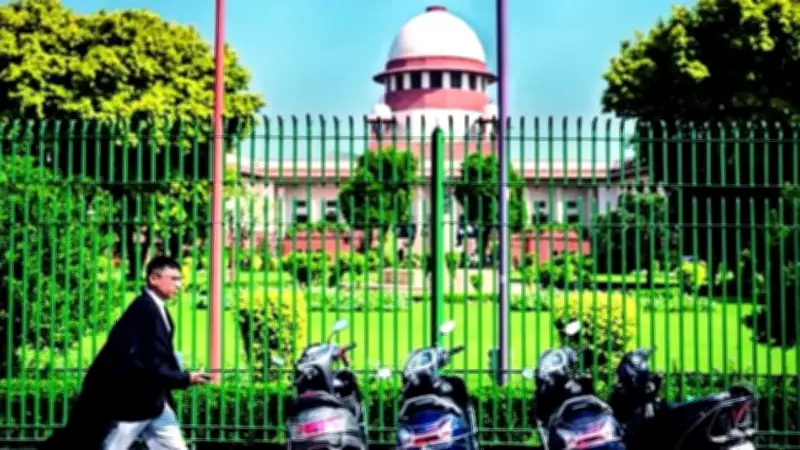
The Supreme Court of India has delivered a landmark judgment affirming that the right to a fair trial cannot be overridden by the Official Secrets Act (OSA). The Court directed the central government to provide copies of classified and confidential documents to Major General V K Singh (Retd), who is facing prosecution under the OSA for allegedly revealing sensitive information in his book.
Right to Fair Trial Prevails
A bench comprising Justices J K Maheshwari and Atul S Chandurkar held that an accused person cannot be denied access to documents that form part of the chargesheet, even if they are highly classified and pertain to national security. The Court emphasized that withholding such documents could seriously prejudice the accused's right to a fair trial.
"It is trite law that an accused cannot be denied access to documents forming part of the chargesheet, including those from the general diary, if such documents were obtained in good faith, are relevant to the prosecution's case, and their disclosure is considered necessary by the public prosecutor for the interests of justice and fair trial," the bench observed.

Case Background
Major General V K Singh (Retd) served as a joint secretary in the Cabinet Secretariat (RAW) from November 2000 to June 2004. He has been charged under the OSA for allegedly revealing classified information in his book titled "India's External Intelligence – Secrets of Research and Analysis Wing (RAW)". The prosecution alleged that the book disclosed names of officials, designations, functions, station codes, technical projects, and the functioning of the telecom division and signals intelligence, including that of SPGs, in violation of the OSA.
The case was registered in 2007, and Singh is being tried under Sections 3 and 5 of the OSA and Sections 409 and 120B of the Indian Penal Code (IPC).
Court's Directions
The Supreme Court directed the government to provide typed copies of the alleged secret documents to Singh within two months. However, the Court imposed strict conditions: Singh must not share the documents with anyone or make them public through any medium, including electronic, print, or social media. He is required to file an undertaking before the trial court within one month to this effect.
The Court relied on Section 207 of the Code of Criminal Procedure (CrPC), which mandates that when criminal proceedings are instituted, the magistrate must provide the accused, free of charge, with copies of documents including the police report, FIR, and witness statements recorded under Section 161 of CrPC.
Rejection of CBI's Argument
The Central Bureau of Investigation (CBI) had invoked Section 14 of the OSA to deny access to the documents. However, the Supreme Court rejected this plea, stating that such an interpretation would render Section 14 ultra vires to Part III of the Constitution, which guarantees fundamental rights. The Court clarified that the OSA cannot be used to deprive an accused of their right to a fair trial.
"Being part of the chargesheet and being used against the said documents ought to be supplied to the appellant. While observing so, we are guided by the letter and spirit of Section 207 of the CrPC," the bench said while allowing Singh's plea.
Implications
This judgment reinforces the principle that national security concerns cannot override the fundamental right to a fair trial. The Court's decision ensures that accused persons have access to all evidence against them, even if it is classified, subject to safeguards against further disclosure. The ruling is expected to have significant implications for cases involving the Official Secrets Act and other similar laws.