Supreme Court Directs Netflix Film Makers to Alter Title Over Community Denigration Concerns
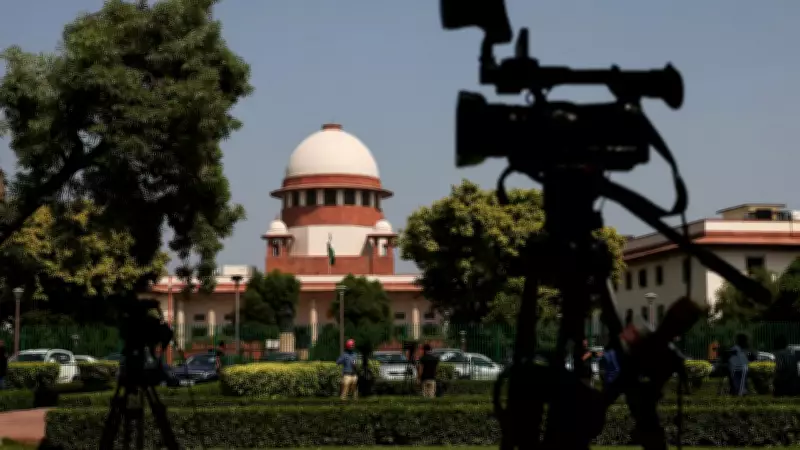
The Supreme Court of India issued a stern reprimand on Thursday to the creators of the Netflix film "Ghooskhor Pandit," ordering them to change the title, which the court deemed denigrative towards a specific community. A bench led by Justice BV Nagarathna emphasized that the highest judicial authority cannot allow any segment of society to be disparaged through film titles or offensive content.
Court's Strong Remarks on Morality and Public Order
Justice Nagarathna verbally remarked, "Why should you denigrate anybody? It’s against morality and public order. Being woke is one thing. But creating this kind of unrest when there is already unrest in the country." She expressed disappointment, noting that filmmakers and journalists are expected to be responsible individuals, aware of the exceptions and reasonable restrictions under Article 19(1)(a), which guarantees the fundamental right to free speech and expression.
The justice further elaborated, "You tell us what names you are suggesting for the title change. Issue notice to the respondents. No section of society should be denigrated. From as early as the late 40s, the framers of the Constitution were aware of the multitude of races, castes, etc. So they introduced the concept of fraternity. If you use your freedom to denigrate any section of society, we can’t permit it."

Background of the Public Interest Litigation
The court was hearing a Public Interest Litigation (PIL) that sought a stay on the release and screening of the upcoming film "Ghooskhor Pandit." The PIL alleged that the movie promotes caste- and religion-based stereotyping, thereby hurting the dignity and religious sentiments of the Brahmin community. This legal challenge highlighted concerns over content that could exacerbate social tensions.
Court's Directives and Future Proceedings
In response to the PIL, the Supreme Court has listed the matter for a hearing on February 19. The respondents, comprising the filmmakers, have been directed to file an affidavit containing a new title and details of other changes in the film to comply with the court's order. This step ensures that the filmmakers must propose alternatives that avoid denigration and align with constitutional values.
The court's intervention underscores the balance between artistic freedom and social responsibility, reinforcing that creative expression must not come at the cost of community harmony. This case sets a precedent for how entertainment content is scrutinized under Indian law, particularly in sensitive contexts involving caste and religion.