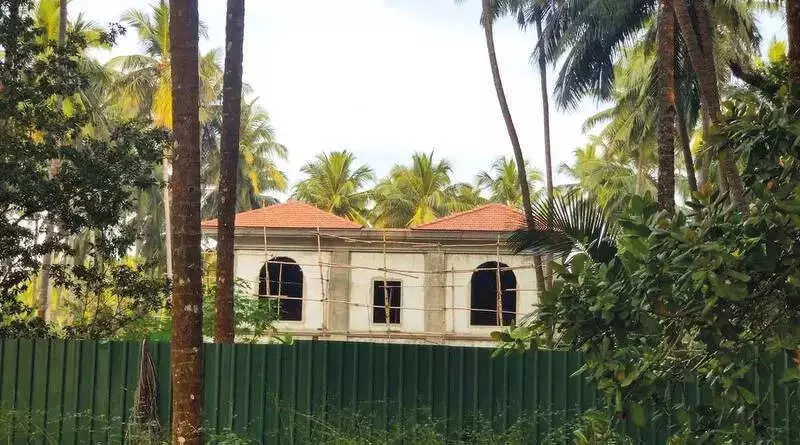
The Supreme Court has intervened in the ongoing controversy surrounding a bungalow in the heritage precincts of Old Goa, directing a committee headed by a district court judge to conduct a physical inspection. The core mandate of this judicial probe is to ascertain whether the construction of the existing bungalow violated established heritage conservation norms.
Long-Running Legal Battle Over Heritage Zone
The dispute over this structure, located within the protected heritage zone of Old Goa, a UNESCO world heritage site, has been a simmering issue since 2022. The controversy gained significant political traction just ahead of the February 2022 state assembly elections, with widespread protests erupting against the building's proximity to the iconic heritage monuments.
The legal journey saw the Archaeological Survey of India (ASI) issue a demolition order for the bungalow in August 2022. However, this order was subsequently set aside by the Bombay High Court in February 2023, which cited procedural lapses in the ASI's action. This High Court decision prompted the Save Old Goa Action Committee, a collective of heritage activists, to approach the Supreme Court, seeking justice and the preservation of the site's historical integrity.

Political Firestorm and Sub Judice Stalemate
The issue has repeatedly spilled over from the courts into the political arena, reflecting deep public sentiment. During the August session of the Goa Legislative Assembly, the tension reached a boiling point. Opposition MLAs stormed into the well of the House, vociferously demanding a firm assurance from Chief Minister Pramod Sawant that the contentious bungalow would be razed to the ground.
In response, the Chief Minister maintained that his hands were tied, as the matter was sub judice—actively under judicial consideration—and therefore, the executive could not take any independent action. This stance, while legally sound, has done little to quell the public protests, which have persisted despite the case being pending before the nation's highest court.
What the Supreme Court Committee Must Determine
The Supreme Court's latest order shifts the focus to a ground-level, factual investigation. The committee led by the district judge is now tasked with a critical on-site examination. Its findings will be pivotal in establishing the factual matrix: whether the construction legally complied with all regulations governing the Old Goa heritage zone or if it was built in blatant disregard of these protective norms.
This move is seen as a crucial step to cut through the procedural complexities and allegations that have characterized the case so far. The outcome of this inspection is likely to form the bedrock of the Supreme Court's final verdict, which is eagerly awaited by heritage conservationists, the state government, and the opposition alike.
The directive underscores the judiciary's active role in mediating between development pressures and the imperative to protect India's invaluable cultural and historical legacy, especially in zones of unparalleled global significance like Old Goa.