

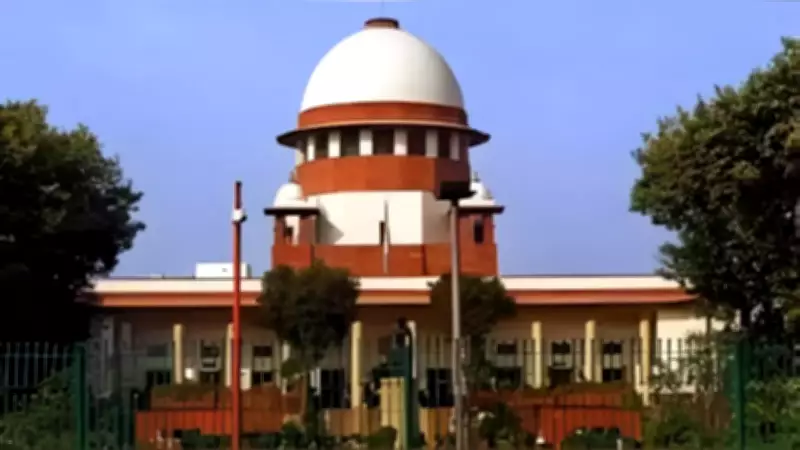
Supreme Court's Landmark Ruling on Medical Admission Fraud
In a significant judgment that balances legal principles with public healthcare needs, the Supreme Court of India has permitted two MBBS students to retain their medical degrees despite their Scheduled Tribe (ST) certificates being declared invalid. The court has directed each student to pay Rs 10 lakh as compensation, creating a precedent at the intersection of admission irregularities and India's doctor shortage crisis.
The Case Background and Legal Journey
The legal dispute originated in Maharashtra, where a scrutiny committee invalidated the tribe certificates that had enabled the two students to secure admission under the reserved category for their MBBS courses. Following this decision, the Bombay High Court upheld the cancellation, effectively nullifying the foundation of their medical education admissions.
By the time the case reached the Supreme Court, both students had successfully completed their MBBS programs and cleared all required examinations. The Division Bench comprising Justices Dipankar Datta and Rajesh Bindal faced a complex question: whether to annul their hard-earned medical degrees despite the invalid admission foundation.

Judicial Reasoning: Public Interest vs. Legal Technicalities
The Supreme Court's decision, as reported by Medical Dialogues, demonstrates remarkable judicial pragmatism. The Bench explicitly noted that "the country lacks enough qualified doctors," a statement that fundamentally shaped their reasoning. The court determined that removing two fully trained medical professionals from India's healthcare system after years of rigorous academic training would be counterproductive, particularly given the nation's chronic shortage of medical practitioners.
This ruling effectively creates a distinction between the illegality of admission and the legitimacy of subsequent academic achievement. While acknowledging the procedural lapses in the admission process, the court recognized the students' demonstrated academic merit and completion of their medical education requirements.
The Financial Penalty as Judicial Remedy
Relief for the students came with substantial conditions. Each has been directed to deposit Rs 10 lakh with the Maharashtra University of Health Sciences within three months. The Bench described this significant sum as a "price" for having deprived eligible tribal candidates of reserved seats that rightfully belonged to them.
This financial penalty represents a unique judicial approach to admission-related cases. Rather than ordering degree revocation—the typical consequence for admission fraud—the court opted for monetary compensation that acknowledges both the wrong committed and the public interest in retaining trained medical professionals.
Broader Implications for Medical Education and Social Justice
The Supreme Court's decision highlights several enduring questions about India's medical education system and reservation policies:
- Can subsequent academic performance validate an admission secured through invalid documentation?
- Does financial compensation adequately address the opportunity lost by genuine reserved-category candidates?
- How should courts balance procedural justice with public healthcare needs?
Legal experts have noted that while this judgment showcases judicial pragmatism, it may spark debate about whether monetary damages sufficiently compensate for the systemic injustice of depriving eligible tribal candidates of educational opportunities. The ruling also brings attention to India's ongoing challenges in meeting the demand for MBBS seats, despite recent government efforts to increase medical education capacity.
Precedent and Future Implications
This verdict establishes a difficult balance between healthcare system interests and procedural accountability. Whether it becomes a precedent for future admission-related cases or remains an exceptional response to specific circumstances will depend on how lower courts interpret and apply this reasoning in similar situations.

The decision serves as a reminder that systemic failures in verification processes can sometimes prompt courts to consider broader societal impacts beyond strict legal technicalities. It also underscores the need for more robust admission verification mechanisms to prevent such conflicts from arising in the first place.
For now, the Supreme Court's ruling stands as a nuanced approach to a complex problem, attempting to address past wrongs while preserving valuable medical resources for India's healthcare system.





