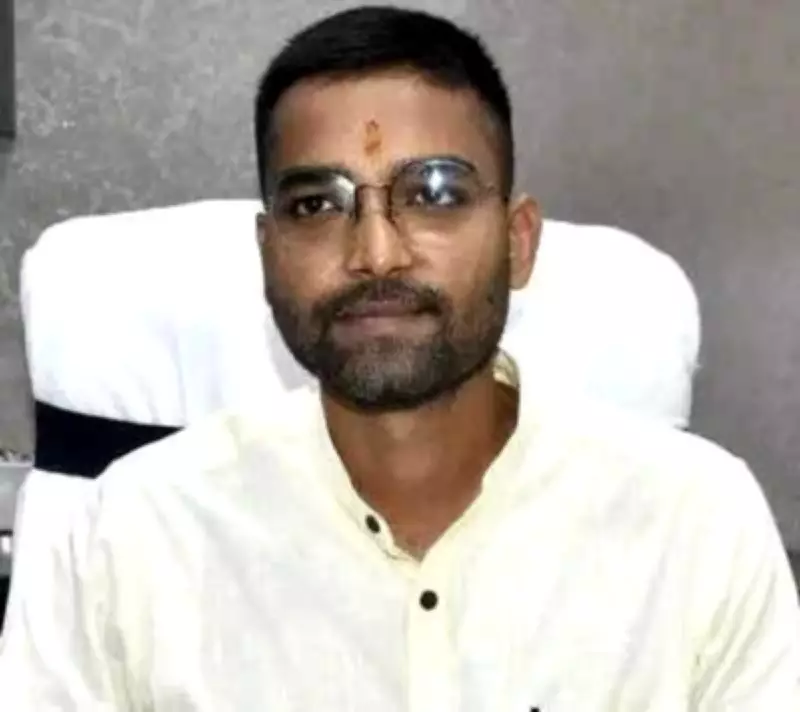
A writ petition has been filed in the Supreme Court challenging the reappointment of Deepak Prakash as Bihar's panchayati raj minister. The petition, filed by social activist Rakesh Kumar Singh, argues that Prakash is not a member of either House of the state legislature and is therefore constitutionally ineligible to continue in the Council of Ministers beyond the limited period permitted for non-legislators.
Constitutional provisions under Article 164(4)
The petition invokes Article 164(4) of the Constitution, which allows a person who is not a member of the state legislature to be appointed as a minister, but only for a maximum period of six consecutive months. During this period, the minister must secure membership of either the legislative assembly or the legislative council. Failing that, the individual must immediately cease to hold ministerial office upon expiry of the six-month term.
Timeline of appointments
According to the plea, Prakash was first inducted into the Bihar cabinet on November 20, 2025, by then Chief Minister Nitish Kumar, despite not being a member of either House. On April 15, 2026, the Nitish government fell, resulting in the dissolution of the Council of Ministers. After a gap of 22 days, Prakash was reappointed on May 7, 2026, in the new government headed by Chief Minister Samrat Choudhary.

Central argument of the petition
The petition's central argument is that the six-month relaxation provided under Article 164(4) is a limited, one-time constitutional concession. It cannot be restarted or extended through reappointment, cabinet reshuffles, resignation, or a change in the chief minister or ruling coalition during the tenure of the same legislative assembly. The petitioner contends that allowing the reappointment of a non-legislator minister after the fall of a government would effectively bypass the constitutional safeguard and dilute the principle that ministers should ordinarily be elected representatives accountable to the legislature.
Constitutional clock argument
The plea further argues that the six-month period commenced with Prakash's initial appointment on November 20, 2025, and expired on May 20, 2026. It maintains that a change in government cannot erase or reset this constitutional clock and that the May 7, 2026 reappointment amounts to an impermissible attempt to revive or extend the grace period.
Reliance on Supreme Court precedent
To support this interpretation, the petition places significant reliance on the Supreme Court's ruling in S.R. Chaudhari v. State of Punjab (2001), which examined repeated appointments of non-legislators as ministers. In that judgment, the Court held that Article 164(4) cannot be used to perpetuate ministerial office for a person who repeatedly fails to secure legislative membership. The Court emphasized that the provision is an exception that must be interpreted narrowly to preserve democratic accountability.
The petition seeks a declaration that Prakash's reappointment is unconstitutional and that he must cease to hold office immediately. The Supreme Court is yet to schedule a hearing on the matter.