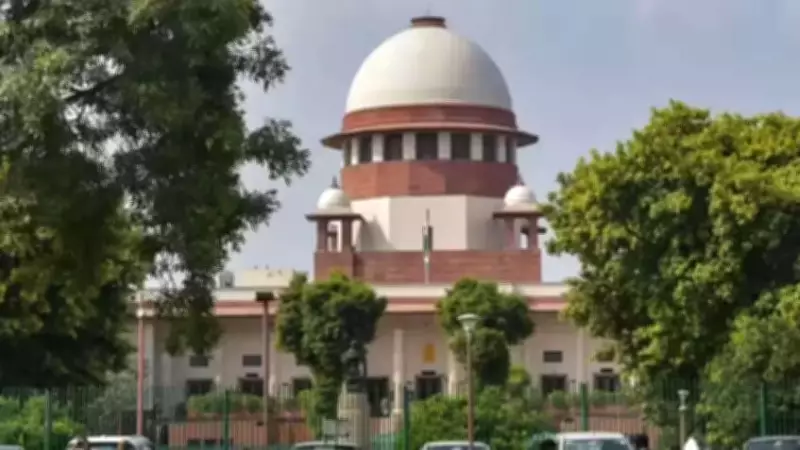
Supreme Court Clarifies Waqf Tribunal Jurisdiction in Mosque Status Dispute
The Supreme Court of India has delivered a significant ruling regarding the status of religious properties under the Waqf Act, 1995. In a judgment that clarifies the jurisdictional boundaries of waqf tribunals, the court stated that the offering of prayers by Muslims at premises not included on the official list of auqaf cannot, by itself, confer the character of a mosque upon that property.
Key Ruling on Mosque Status and Tribunal Authority
The bench, comprising Justices Sanjay Kumar and K Vinod Chandran, emphasized that unless a mosque stands on land formally designated as waqf property, the waqf tribunal lacks the authority to entertain suits seeking to declare a place as a mosque. This decision came in response to a property dispute in Hyderabad's upscale Banjara Hills area, where the ground floor of an apartment complex had been claimed as a mosque since 2008.
Background of the Hyderabad Property Dispute
The case originated when Mohammed Ahmed filed a suit before the waqf tribunal, seeking to restrain Habib Alladin and others from obstructing access to what was described as the Mahmood Habib Masjid and Islamic Centre. The property owner contested this claim, arguing that the building plan made no mention of the disputed area as a mosque and that the tribunal therefore had no jurisdiction. When the Telangana High Court rejected the owner's plea, the matter escalated to the Supreme Court.

Legal Analysis of Waqf Act Provisions
After thorough examination of relevant judgments, the Supreme Court bench provided a detailed interpretation of Sections 6 and 7 of the Waqf Act, 1995. The court clarified that the tribunal's jurisdiction to determine whether a property qualifies as waqf property, or whether it constitutes a Shia or Sunni waqf, is strictly contingent upon the property being specified in the official 'list of auqaf.'
The bench explicitly stated: "A bare reading of the plaint would indicate that neither is the property specified in the 'list of auqaf' as published in Chapter II nor registered under Chapter V. Hence, the decision as to whether the property is a waqf property or not cannot be decided by the tribunal since the property is not one specified in the 'list of auqaf,' which is the mandatory requirement... to approach the tribunal."
Court's Decision and Its Implications
The Supreme Court deliberately refrained from addressing whether the property could be considered a 'waqf by user,' noting that this question remains unresolved. Consequently, the court set aside both the tribunal's order assuming jurisdiction and the High Court's order affirming that decision. This ruling establishes a clear precedent that religious usage alone, without formal inclusion in the auqaf list, does not automatically grant a property mosque status under the Waqf Act.
This judgment reinforces the procedural requirements under the Waqf Act and emphasizes the importance of formal registration and listing for properties seeking recognition as religious endowments. The decision is expected to have significant implications for similar property disputes across India, particularly those involving claims of religious usage without formal documentation.