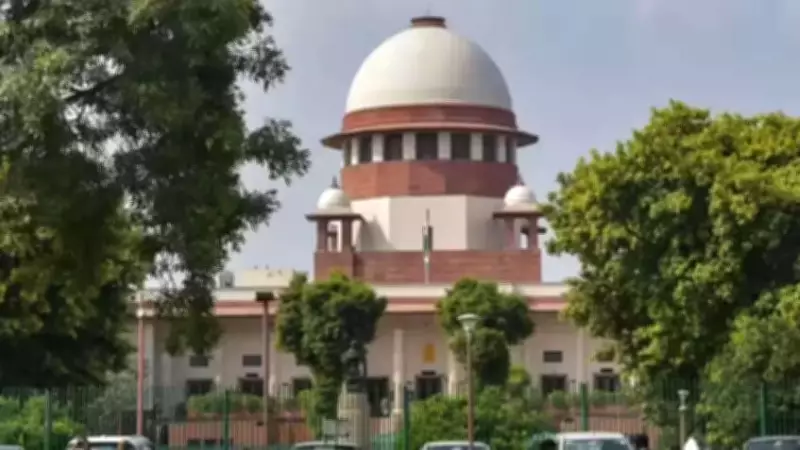
In a significant development, the Supreme Court of India has taken up a suo motu examination of a contentious issue regarding minority status claims in educational admissions. The apex court decided on Wednesday to scrutinize whether individuals born into affluent upper-caste families can legally convert to claim minority status, thereby becoming eligible for admission to minority educational institutions.
Case Background: Brother-Sister Doctor Duo's Admission Bid
The case came to light through a petition filed by a brother-sister doctor duo from an affluent village who successfully cleared the NEET-PG examination. They sought to pursue their post-graduate medical courses at a specific medical institute in Uttar Pradesh. This institute claims to be a minority institution belonging to the Buddhist community, a status that has been legally challenged.
Legal Arguments and Government Stance
During the proceedings, the counsel representing the siblings argued before a bench comprising Chief Justice of India Surya Kant and Justice Joymalya Bagchi. They contended that the Uttar Pradesh government was refusing to grant minority status to the institution, which in turn was obstructing the siblings' admissions. The bench, however, took a critical view of the circumstances surrounding the case.
Scrutiny of Affluent Background and Conversion Claims
Chief Justice Surya Kant, hailing from Haryana, noted that the brother-sister duo originated from the affluent Satrod Kalan village in Hisar district. Upon meticulous examination of their NEET-PG application forms, it was discovered that both applicants had initially applied under the 'general category'. Subsequently, they obtained minority certificates from the sub-divisional officer in Hisar last year, following their alleged conversion to Buddhism.
Judicial Doubts and Inquiry Order
The justices expressed serious doubts regarding the authenticity and procedural integrity of these minority certificates. In response, they directed the chief secretary of Haryana to conduct a thorough inquiry into the process adopted by the sub-divisional officer in issuing these certificates. The bench emphasized the need for transparency and adherence to legal norms in such matters.
Dismissal of Plea and Broader Implications
Consequently, the Supreme Court dismissed the siblings' plea, highlighting concerns over potential misuse of conversion for securing admissions under minority quotas. This decision underscores the court's commitment to ensuring that minority status provisions are not exploited by individuals from privileged backgrounds, thereby preserving the intended benefits for genuinely marginalized communities.
The court's suo motu intervention signals a proactive approach to addressing complex socio-legal issues in India's education system. It raises important questions about the intersection of religion, caste, and educational opportunities, potentially setting a precedent for future cases involving similar claims. The outcome of the inquiry ordered by the court is awaited, as it may influence policies on minority admissions across the country.