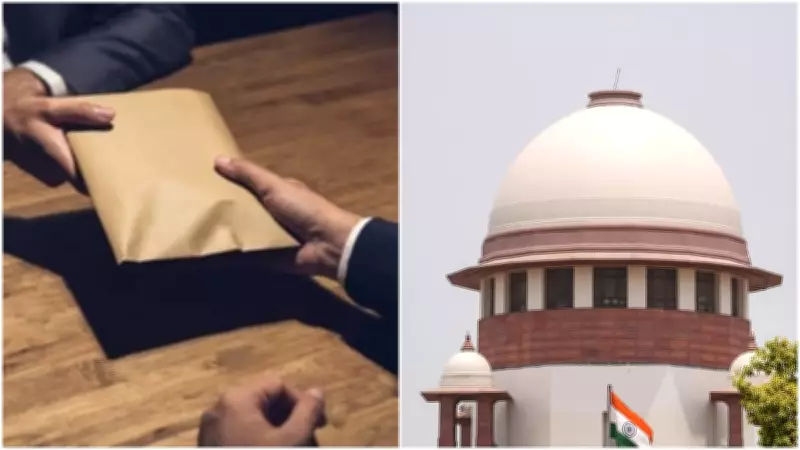
The Supreme Court of India has delivered a significant ruling on corruption cases involving public servants. The court clarified that a public servant need not personally accept a bribe to be found guilty of corruption. The offence can be committed directly by the public servant or through another public servant by exercising personal influence.
Key Ruling by the Supreme Court
The bench, while interpreting the Prevention of Corruption Act, emphasized that the act of receiving a bribe can be executed indirectly. A public servant can be held liable if they use their position to influence another public servant to accept a bribe on their behalf. This interpretation broadens the scope of culpability under anti-corruption laws.
Implications for Corruption Cases
This judgment is expected to have far-reaching implications in the prosecution of corruption cases. It closes a potential loophole where public servants could evade liability by claiming they did not personally accept the bribe. The court stated that the essence of the offence is the corrupt intent and the use of official position for undue advantage, regardless of who physically receives the bribe.

Background of the Case
The ruling came in a case where a public servant was accused of facilitating a bribe through a colleague. The lower courts had acquitted the accused on the ground that there was no direct evidence of the accused personally accepting the bribe. The Supreme Court overturned this acquittal, holding that the law does not require personal acceptance.
- Legal Principle: The offence of corruption is complete when a public servant demands or agrees to accept a bribe, even if the actual receipt is through another person.
- Personal Influence: Exercising influence over another public servant to accept a bribe constitutes an offence under the Prevention of Corruption Act.
- Burden of Proof: The prosecution must prove that the accused had the requisite mens rea (guilty mind) and used their position to influence the transaction.
Reactions and Analysis
Legal experts have welcomed the judgment, stating that it strengthens the fight against corruption. It sends a clear message that public servants cannot shield themselves by using intermediaries. The ruling aligns with the principle that corruption is a grave offence that undermines public trust in government institutions.
Future Directions
The Supreme Court has directed trial courts to adopt a broader interpretation of the provisions related to bribery. This includes considering circumstantial evidence and the chain of events that indicate a corrupt understanding between the public servant and the bribe giver. The judgment is likely to lead to more convictions in cases where direct evidence of bribe acceptance is lacking but there is strong circumstantial evidence of corrupt practices.
In conclusion, the Supreme Court's ruling clarifies that the act of accepting a bribe is not limited to physical receipt. Public servants can be held accountable for corrupt acts committed through others under their influence, thereby reinforcing the accountability mechanisms in public office.