The Supreme Court of India on Tuesday delivered a sharp rebuke to the Commission for Air Quality Management (CAQM), holding it responsible for failing to perform its duty as the air quality in the national capital remained entrenched in the 'poor' category.
Court's Stern Directive to the Air Quality Body
Expressing clear frustration, the apex court rejected the CAQM's plea for a two-month adjournment on crucial anti-pollution measures. The bench, led by Chief Justice of India Surya Kant, stated that the commission appeared to be in no hurry to either pinpoint the causes of the worsening Air Quality Index (AQI) or devise long-term solutions.
The court has now directed the CAQM to convene a meeting of experts within two weeks and submit a comprehensive report identifying the major causes behind the deteriorating pollution levels. "We are therefore compelled to issue directions necessary to expedite the identification of causes as well as long term solutions," CJI Surya Kant remarked during the hearing.

Delhi's Grim Air Quality Reality
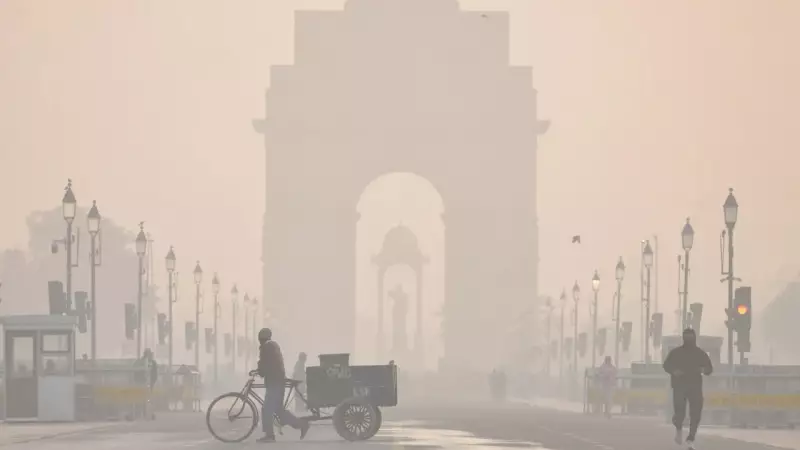
The court's strong remarks came against the backdrop of persistently bad air in Delhi. Data from the Central Pollution Control Board (CPCB) on Tuesday morning showed the city's average AQI at 293, firmly in the 'poor' category. The situation was particularly severe in some areas, with Chandni Chowk recording a worrying AQI of 352.
Furthermore, twenty air quality monitoring stations across the city logged readings in the 'very poor' category. Weather forecasts indicate that pollution levels are likely to remain in the 'poor' to 'very poor' range for at least the next six days, adding urgency to the court's intervention.
Ongoing Measures and Toll Plaza Directive
This hearing was a continuation of proceedings from December 17. In that earlier session, the Supreme Court had directed the Municipal Corporation of Delhi (MCD) and the National Highways Authority of India (NHAI) to consider the temporary closure or relocation of nine toll plazas situated at Delhi's borders. This measure is aimed at reducing vehicular congestion, a significant contributor to pollution.
The latest order underscores the judiciary's proactive stance in holding authorities accountable for the public health crisis triggered by air pollution. By setting a strict two-week deadline, the Supreme Court has signaled an end to delays and demanded concrete, expert-backed action from the specialized body created to tackle this very issue.