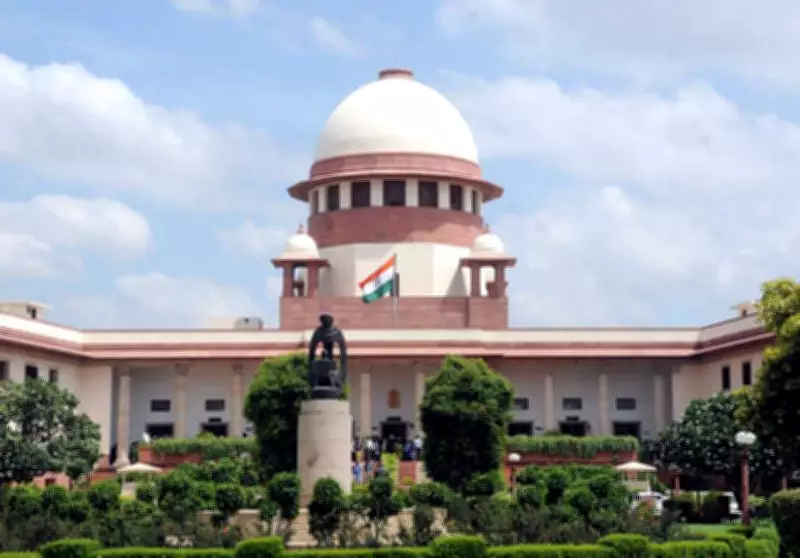
The Supreme Court on Tuesday set aside an order of the Ministry of Home Affairs (MHA) that had rejected the voluntary retirement request of IPS officer Abdur Rahman, who had participated in protests against the Citizenship Amendment Act (CAA). The apex court directed the MHA to reconsider the plea afresh, taking into account the officer's service record and the circumstances surrounding his participation in the protests.
Background of the Case
IPS officer Abdur Rahman, a 2005-batch officer of the Uttar Pradesh cadre, had sought voluntary retirement from service in 2020. However, the MHA rejected his plea, citing his involvement in the anti-CAA protests in December 2019. The officer had participated in a peaceful protest against the CAA, which he believed was discriminatory against Muslims. The MHA argued that such participation amounted to misconduct and violated the service rules.
Supreme Court's Observations
Hearing the matter, a bench comprising Justices D.Y. Chandrachud and Hima Kohli observed that the MHA's decision was arbitrary and lacked proper application of mind. The court noted that the officer had an unblemished service record of over 15 years, with no prior disciplinary action. The bench stated that participating in a peaceful protest cannot be automatically considered a ground for rejecting voluntary retirement, especially when the officer had not been charged with any specific misconduct.

The Supreme Court emphasized that the right to peaceful protest is a fundamental right under Article 19(1)(a) and (b) of the Constitution. It directed the MHA to reconsider the voluntary retirement application within eight weeks, taking into account the officer's overall service record and the nature of his participation in the protest.
Reactions and Implications
The verdict has been welcomed by civil rights groups and legal experts, who see it as a reaffirmation of the right to dissent. Abdur Rahman's lawyer argued that his client had served the nation diligently and that his participation in a peaceful protest should not be held against him. The MHA, on the other hand, maintained that the officer's actions were unbecoming of a senior IPS officer and could set a bad precedent.
The case has broader implications for government employees who exercise their right to protest. The Supreme Court's ruling makes it clear that peaceful dissent cannot be arbitrarily used to deny legitimate service benefits. The matter will now be heard by the MHA, which has been directed to pass a fresh order within two months.