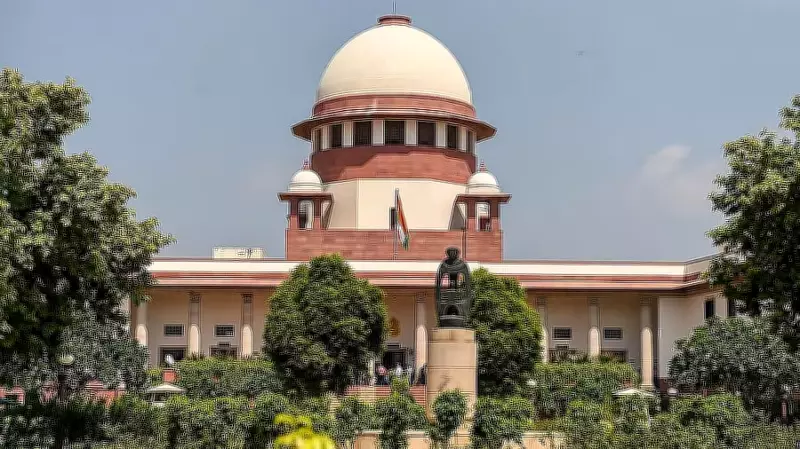
The Supreme Court of India has exercised its extraordinary power under Article 142 of the Constitution to quash a case filed under the Protection of Children from Sexual Offences (POCSO) Act, after the victim married the accused. The decision, delivered on 10 June 2026, underscores the court's authority to pass any order necessary for doing 'complete justice' in any cause pending before it.
Background of the Case
The case involved a man who was accused of committing sexual offences against a minor. However, during the pendency of the proceedings, the victim and the accused entered into a marriage. The couple approached the Supreme Court seeking quashing of the criminal case, citing their marital union and the need to move forward in life.
Supreme Court's Reasoning
A bench of the Supreme Court, while allowing the plea, observed that continuing the prosecution would not serve the interests of justice, especially when the victim had married the accused and expressed a desire to live with him. The court noted that Article 142 empowers it to pass such orders as are necessary to ensure complete justice, and in this case, quashing the POCSO case was deemed appropriate to prevent further hardship to the parties.

The court also emphasized that the power under Article 142 is not constrained by statutory provisions and can be invoked to do substantial justice. However, it cautioned that such powers should be exercised sparingly and only in cases where there is no other remedy available.
Legal Implications
This ruling has sparked debate among legal experts. Some argue that it sets a precedent for quashing serious criminal cases on the basis of marriage, which could undermine the protective intent of the POCSO Act. Others contend that the court's intervention was necessary in the peculiar facts of the case, where the victim herself sought closure and the accused had no prior criminal record.
The Supreme Court's decision highlights the delicate balance between upholding the law and ensuring justice in individual cases. It also reaffirms the court's role as a guardian of constitutional values, capable of adapting legal remedies to unique circumstances.
Reactions and Future Outlook
While the judgment has been welcomed by the family of the accused, women's rights groups have expressed concern over the potential misuse of Article 142 to dilute the provisions of POCSO. The court, however, clarified that each case must be decided on its own merits, and this order should not be seen as a blanket approval for quashing similar cases.
As the legal community analyzes this judgment, it remains to be seen how lower courts will interpret the Supreme Court's use of Article 142 in POCSO cases. The ruling serves as a reminder of the judiciary's power to deliver complete justice, even when statutory laws may appear rigid.