The Supreme Court of India has expressed profound shock and dismay over a glaring failure in the judicial system: an undertrial prisoner was not physically produced before a trial court near Mumbai for a staggering 55 out of 85 hearings in his case. The apex court emphasized that the physical production of an accused is a fundamental safeguard, crucial not just for a speedy trial but to prevent abuse and allow the prisoner direct access to the court to voice grievances.
A Systemic Failure Under Scrutiny
During a hearing on December 2, the bench of Justices Ahsanuddin Amanullah and Prashant Kumar Mishra was informed about the case of Shashi Jumani, lodged in Kalyan jail for over four years in an alleged assault case. His lawyer, Sana Raees Khan, presented roznama records showing Jumani was rarely brought to court physically, often appearing via video-conference or not at all. The court deprecated this "grave infraction" of a fundamental right and ordered the Maharashtra Director General of Prisons to conduct an inquiry and submit a report within two months.
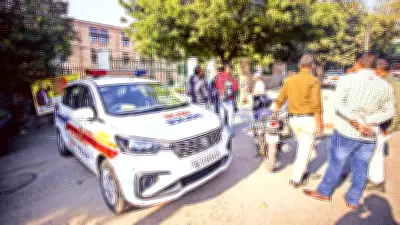
This case is not an isolated incident. In the vast Mumbai Metropolitan Region, where jails and courts can be over 50 km apart, undertrials frequently complain of not being produced for weeks. The core reason, authorities often cite, is a crippling shortage of police guards tasked with prisoner escort duty.
The Broken Chain: From Jail to Courtroom
Undertrials, who constitute about 75% (3.9 lakh) of India's total prison population as per 2023 statistics, are individuals awaiting trial and are presumed innocent. Their physical production in court is vital for seeking bail, medical help, or other facilities. The responsibility for this transport lies with the police, not the prisons department.
Every day, jails send requests to local police for escorts. However, the sanctioned police strength is perpetually inadequate for the number of undertrials. Priority is often given to those with urgent medical needs or cases at critical stages like judgment pronouncement. Others may be relegated to video-conference appearances, despite a 2005 Bombay High Court guideline recommending at least one physical production after every three virtual ones.
VIP Duties, Concerts, and the Guard Shortage
The already thin ranks of escort guards are routinely diverted for other duties, exacerbating the crisis. Bandobast for VIP movements, protests, international dignitary visits, and even major events like cricket matches and music concerts take precedence. For instance, in January, accused in the Elgaar Parishad case threatened a hunger strike after Navi Mumbai police cited guard deployment for a Coldplay concert as a reason for potential non-production.
A Bombay High Court-appointed reform committee, led by retired Justice S Radhakrishnan, had earlier recommended that 5% of a district police's sanctioned strength be earmarked for escort duty. It also suggested regular meetings between police and prison officials. While some improvement followed, the gap remains vast. The Navi Mumbai commissionerate, for example, has only 239 guards for escort duties, a number stretched thin by demands from Mumbai courts and other bandobast.
Video-Conferencing: An Imperfect Solution
While often touted as a fix, video-conferencing is plagued by technological glitches and poor connectivity in some jails and courts. More importantly, as officials note, it denies undertrials the crucial, direct interaction with their lawyers and family members during court visits. It also leaves them isolated during proceedings, without immediate legal counsel to explain complex judicial processes.
The Supreme Court's directive for a probe aims to fix accountability in Jumani's case. However, it also shines a harsh light on a systemic malaise affecting the rights of thousands of undertrials across Maharashtra and potentially the nation. The inquiry's findings may force a long-overdue reckoning with the chronic shortage of human resources and the misplaced priorities that keep accused persons away from the justice they are entitled to face.