

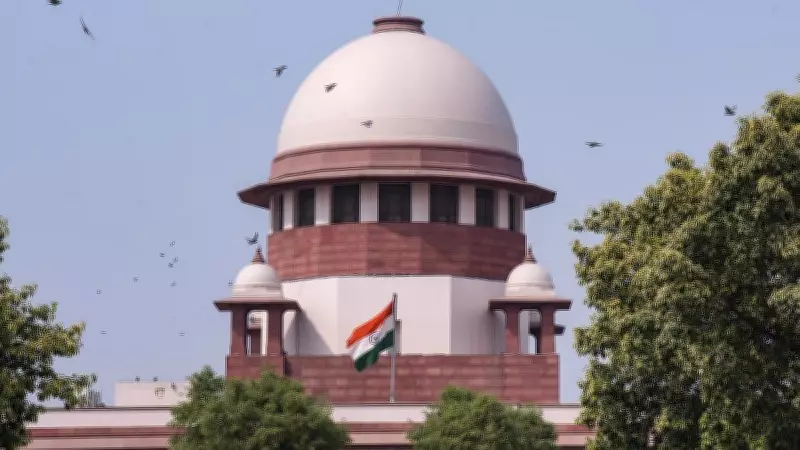
Supreme Court Reprimands West Bengal Chief Secretary Over Judicial Disregard
The Supreme Court of India delivered a stern rebuke to the Chief Secretary of West Bengal, Nandini Chakraborty, for failing to respond to a call from the Chief Justice of the Calcutta High Court. The apex court emphasized the importance of respecting judicial authority, stating that officials must "lower yourself a little bit" when dealing with the judiciary.
Case Background and Judicial Proceedings
This incident arose during hearings related to the Malda gherao case, where protesters allegedly surrounded and threatened judicial officers in Malda district. The Calcutta High Court had sought the Chief Secretary's intervention to address security concerns, but her office did not take the Chief Justice's call, leading to the Supreme Court's intervention.
Key Developments in the Courtroom:

- The Supreme Court bench, comprising Justices Sanjay Kishan Kaul and Sudhanshu Dhulia, expressed strong disapproval of the Chief Secretary's conduct.
- Justices highlighted that such behavior undermines the dignity of the judiciary and sets a poor precedent for administrative compliance.
- The court noted that the Chief Secretary's failure to engage could impede justice in sensitive cases like the Malda incident.
Transfer of Malda Gherao Case to NIA
In a significant move, the Supreme Court ordered the transfer of the Malda gherao case from state agencies to the National Investigation Agency (NIA). This decision aims to ensure an impartial and thorough investigation into the allegations of intimidation against judicial officers.
Reasons for the Transfer:
- Concerns over potential bias or inefficiency in the state-led investigation.
- The need for a centralized agency to handle cases with broader implications for judicial security.
- To uphold public confidence in the legal process amid allegations of political interference.
Implications for Governance and Judiciary
This ruling underscores the critical balance between executive authority and judicial independence in India. The Supreme Court's directive serves as a reminder to all government officials about their duty to cooperate with the judiciary, especially in matters affecting the rule of law.
Broader Context: The Malda gherao case is part of ongoing tensions in West Bengal, where incidents of political violence and protests have occasionally targeted judicial figures. The NIA's involvement is expected to bring federal oversight to such cases, potentially deterring future violations.
In summary, the Supreme Court's actions highlight a firm stance on judicial respect while reinforcing mechanisms for unbiased investigations in sensitive matters.






