

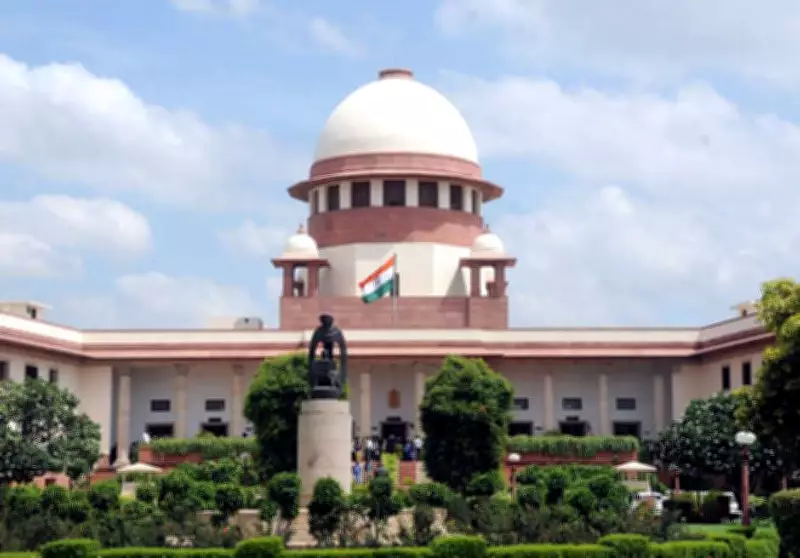
Supreme Court Redirects Runaway Couple Protection Plea to Delhi High Court
A woman lawyer approached the Supreme Court of India on Friday, seeking urgent protection for a runaway couple who feared severe repercussions from their families. However, the bench, led by Chief Justice of India Surya Kant, directed her to file the petition with the Delhi High Court instead, emphasizing the proper judicial hierarchy.
Couple's Misguided Belief Influenced by Social Media
The lawyer informed the court that she discovered the young couple in the Supreme Court's parking lot. According to her submission, the couple had arrived under a mistaken belief, heavily influenced by social media reels, that they could get married within the court premises and receive immediate protection from the Chief Justice of India.
She detailed that the couple anticipated serious harm from their parents, who allegedly intended to punish them severely for their relationship. In an attempt to secure their safety, the lawyer escorted them to the Tilak Marg police station. However, instead of offering protection, the police reportedly tried to detain them, escalating their distress.

Judicial Bench's Response and Jurisdictional Emphasis
The bench, which also included Justices Joymalya Bagchi and Vipul M. Pancholi, listened to the plea but firmly asked the lawyer to approach the Delhi High Court for relief. CJI Surya Kant clarified that if the high court failed to provide adequate protection, the couple could return to the Supreme Court for further recourse. He assured that the top court would communicate with the Registrar (Judicial) of the Delhi High Court to ensure the matter received appropriate consideration.
Expressing concern over litigants bypassing high courts, the CJI questioned, "Why this step-motherly treatment to Article 226 jurisdiction (of high courts)?" He reflected on his past experience as a judge in the Punjab and Haryana High Court, where he handled numerous similar cases, underscoring the competence of high courts in such matters.
Legal Implications and Broader Context
This incident highlights several key aspects of India's judicial system:
- Jurisdictional Protocols: The Supreme Court's decision reinforces the importance of adhering to jurisdictional levels, with high courts serving as the primary forum for such protection pleas under Article 226 of the Constitution.
- Social Media Influence: The case underscores how misinformation on social media platforms can lead individuals to make misguided legal decisions, potentially endangering their safety.
- Police Response: The alleged attempt by police to detain the couple raises questions about law enforcement's handling of sensitive cases involving personal relationships and threats.
The lawyer's plea, though redirected, has brought attention to the challenges faced by runaway couples in India, where familial opposition can sometimes lead to violence or legal hurdles. The Supreme Court's directive aims to streamline the judicial process while ensuring that such cases are addressed promptly and effectively at the appropriate level.






