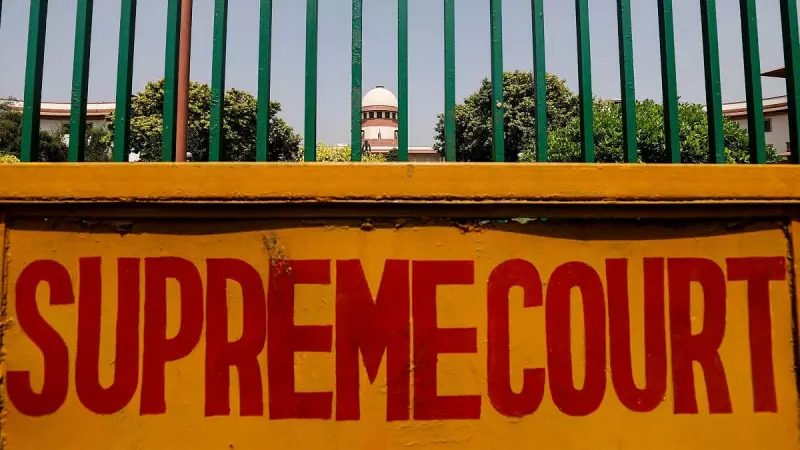
In a significant ruling, the Supreme Court of India has held that a couple's mutual refusal to live together and accommodate each other amounts to an act of cruelty. The apex court exercised its extraordinary powers to dissolve a marriage it deemed to have broken down beyond repair.
Court Invokes Article 142 for Justice
The bench, in its judgment delivered on 15 December 2025, utilized its authority under Article 142 of the Constitution of India. This provision grants the Supreme Court the power to pass any decree or order necessary for doing complete justice in any case pending before it. The court applied this power to formally end the marital union between the parties, observing that their relationship had suffered an irretrievable breakdown.
The Core of the Ruling: Refusal as Cruelty
The central legal principle established in this case is that when both spouses demonstrate a steadfast unwillingness to cohabit and make adjustments for one another, it creates a situation of mental cruelty. This mutual denial to fulfill basic marital obligations provided the grounds for the court to intervene. The judgment underscores that marriage is a shared journey requiring mutual effort, and a conscious refusal to participate in that journey can be legally construed as cruelty.

Implications and Conclusion
This ruling sets a notable precedent in Indian family law. It clarifies that cruelty is not always an active, overt act but can also manifest as a passive, persistent refusal to engage in marital life. By invoking Article 142 in a case of irretrievable breakdown, the Supreme Court has provided a pathway to relief for couples trapped in dead marriages where traditional fault grounds may be difficult to prove individually. The decision, reported by Ashish Tripathi, reinforces the judiciary's role in delivering equitable outcomes in complex personal matters where the law may be silent on specific circumstances.