

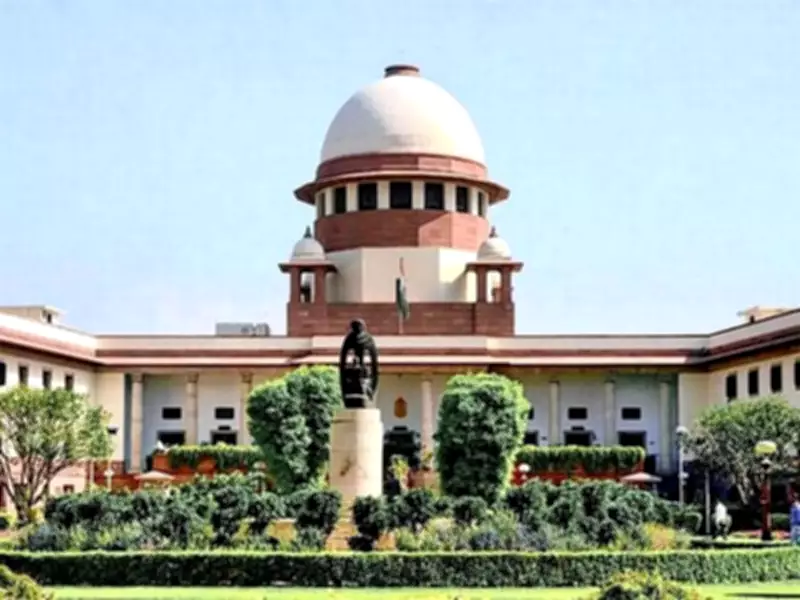
The Supreme Court on Wednesday declined to intervene in the matter of hate speeches, stating that the existing framework of criminal law adequately addresses the issue and there is no legal vacuum that could justify its intervention.
Court's Observations on Legal Framework
A bench of Justices Vikram Nath and Sandeep Mehta noted that the government can consider amending the law to tackle the menace in view of societal changes. The apex court made these observations while hearing a batch of petitions seeking action against those involved in hate speeches and a mechanism to deal with such instances.
The bench said, "The contention that the field of hate speech remains legislatively unoccupied is misconceived." It emphasized that courts cannot legislate; they can only enforce rights.

Preservation of Constitutional Order
While declining to issue directions of the nature sought, the court observed, "We deem it appropriate to observe that the issues relating to hate speeches and rumour-mongering bear directly upon the preservation of fraternity, dignity and Constitutional order."
The Supreme Court stressed that the constitutional scheme founded upon the doctrine of separation of powers does not permit the judiciary to create new offences or expand the contours of criminal liability through judicial directives.
Judicial Precedents on Legislation
The court further stated, "The precedents of this court consistently affirm that while constitutional courts may interpret the law and issue directions to secure the enforcement of fundamental rights, they cannot legislate or compel legislation." This underscores the limits of judicial intervention in policy matters.
The ruling reaffirms that the responsibility to address hate speech lies with the legislature and the executive, and the judiciary will not step into their domain unless there is a clear violation of fundamental rights.






