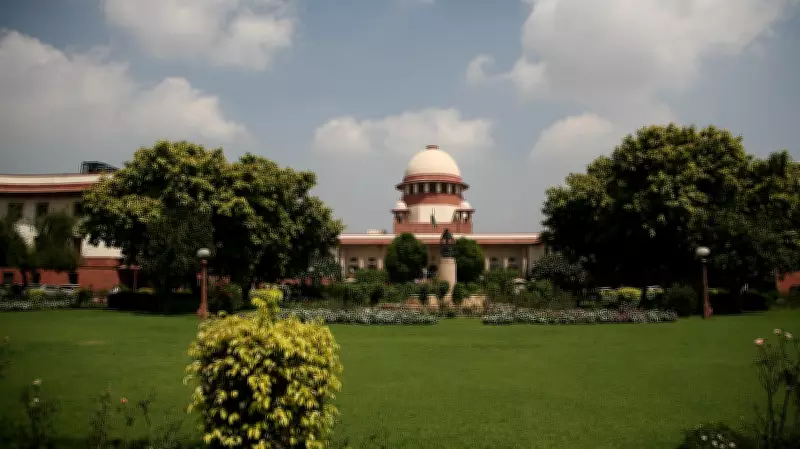
The Supreme Court on Monday refused to entertain a plea challenging the ongoing demolition drive in Gurugram, asking the petitioners to approach the Punjab and Haryana High Court instead. A bench of the apex court noted that the matter pertains to the high court's jurisdiction and directed the petitioners to seek relief there.
Court's Direction
The bench, while hearing the matter, requested the chief justice of the Punjab and Haryana High Court to consider entertaining the mentioning of the case either at 1 PM or immediately after lunch at 1:45 PM. This was to ensure that the petitioners' concerns are addressed promptly.
Background of the Case
The demolition drive in Gurugram has been a contentious issue, with several residents and groups claiming that the actions were carried out without proper notice and in violation of legal procedures. The petitioners had sought the Supreme Court's intervention to halt the demolitions, arguing that they were arbitrary and caused undue hardship.

However, the Supreme Court clarified that it would not interfere at this stage, as the high court is better equipped to handle the local nuances of the case. The bench emphasized that the high court can examine the facts and pass appropriate orders.
Next Steps for Petitioners
With the Supreme Court's refusal, the petitioners are now expected to approach the Punjab and Haryana High Court for relief. The high court will likely hear the matter soon, given the urgency expressed by the Supreme Court bench. Legal experts suggest that the high court may issue interim orders to balance the interests of all parties involved.
The demolition drive in Gurugram is part of a larger effort to remove illegal constructions in the city. Authorities have maintained that the actions are in compliance with court orders and municipal regulations. However, critics argue that the drive has been conducted in a heavy-handed manner, affecting many low-income families.
Reactions and Implications
The Supreme Court's decision has elicited mixed reactions. While some legal observers view it as a procedural step that respects the high court's jurisdiction, others believe it delays justice for those affected. The Punjab and Haryana High Court is now under pressure to resolve the matter swiftly.
This case highlights the ongoing challenges in urban development and the enforcement of building laws in India. It also underscores the importance of following due process in demolition drives to avoid unnecessary litigation and hardship.