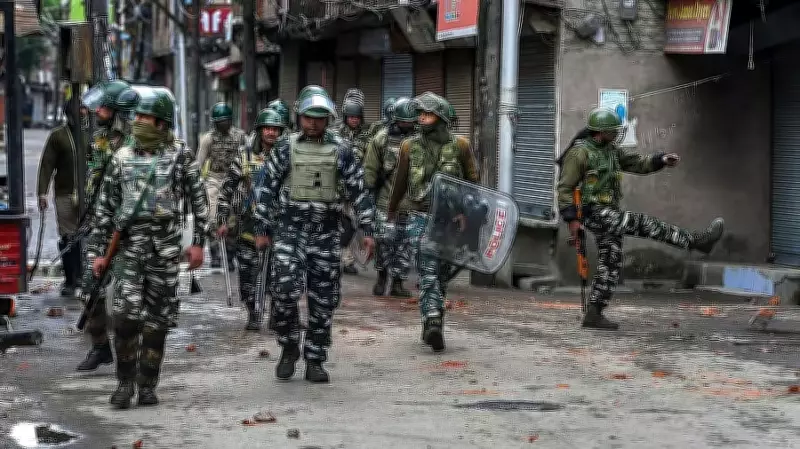
The Supreme Court on Monday refused to entertain a plea seeking the continuation of central forces in West Bengal following the 2026 Assembly elections, citing the limited role of the Election Commission after the polling process concludes.
Court's Stance on Post-Poll Security
A bench comprising Justices observed that the Election Commission's mandate ends once the elections are over. The counsel representing the poll panel argued that its role ceases after the completion of the electoral process, and therefore, it cannot be held responsible for post-poll violence.
Background of the Plea
The plea was filed by a petitioner who cited previous instances of post-poll violence in the state, particularly during the 2021 Assembly elections, when central forces were deployed to maintain law and order. The petitioner sought a direction for the continuation of central forces until the situation stabilizes.

However, the Supreme Court declined to intervene, stating that law and order is a state subject and the state government is responsible for maintaining peace after elections. The court also noted that the Election Commission's jurisdiction is limited to the conduct of free and fair elections.
Election Commission's Submission
The Election Commission's counsel submitted that while the commission ensures a level playing field during elections, it cannot be expected to manage post-poll violence. The commission highlighted that its powers are derived from the Constitution and the Representation of the People Act, which do not extend to post-election security arrangements.
The court agreed with this submission and dismissed the plea, leaving it to the West Bengal government to handle any law and order issues that may arise after the elections.
Reactions and Implications
Political parties in West Bengal have reacted differently to the verdict. The ruling party welcomed the decision, stating that it reaffirms the federal structure and the state's autonomy in maintaining law and order. Opposition parties, however, expressed concern over potential violence, recalling past incidents.
Legal experts noted that the judgment reinforces the constitutional separation of powers and the limited scope of the Election Commission's authority. They added that any demand for central forces must be addressed by the state government or through the Union government under its constitutional powers.
Past Incidents of Post-Poll Violence
West Bengal has witnessed significant post-poll violence in previous elections, particularly in 2021, when clashes between political parties led to injuries and property damage. The central forces had been deployed in sensitive areas to prevent such incidents. However, the Supreme Court's latest ruling makes it clear that such deployments cannot be ordered by the Election Commission after the polls.
The judgment is likely to set a precedent for future elections, emphasizing that the Election Commission's role is confined to the electoral process and not the aftermath.