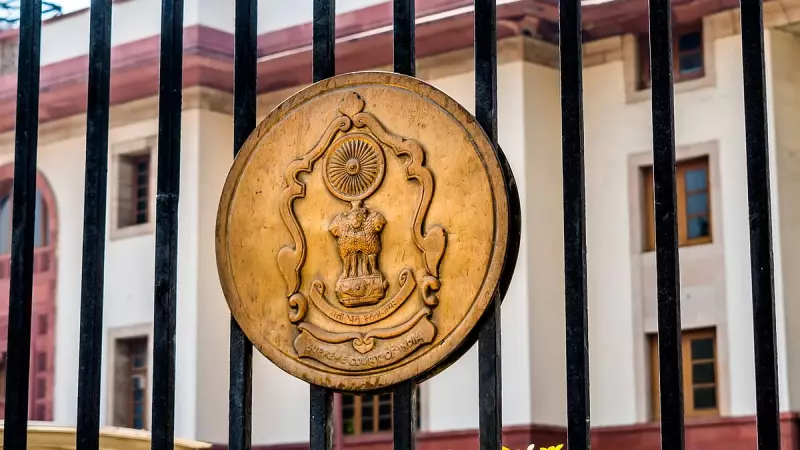
Supreme Court Declines JioStar's Request to Stop CCI Investigation
The Supreme Court of India has refused to entertain a plea filed by telecommunications company JioStar, which sought to halt an ongoing investigation by the Competition Commission of India (CCI). The court's decision marks a significant development in the regulatory scrutiny facing the telecom sector.
Legal Arguments Presented by JioStar
During the proceedings, JioStar's counsel presented arguments emphasizing that the company operates under the regulatory framework established by the Telecom Regulatory Authority of India (TRAI) Act of 1997. This legislation specifically governs pricing mechanisms within the telecommunications industry, including stipulations on how much companies can charge for services or offer as discounts.
The counsel contended that since JioStar's pricing strategies are already regulated and monitored by TRAI, the additional investigation by CCI into potential anti-competitive practices is unnecessary and could lead to regulatory overlap. They argued that this dual scrutiny might create legal ambiguities and operational challenges for the company.
Implications of the Supreme Court's Decision
By declining to consider the plea, the Supreme Court has effectively allowed the CCI probe to proceed without judicial intervention at this stage. This decision underscores the judiciary's stance on maintaining the autonomy of regulatory bodies like CCI in conducting investigations into alleged violations of competition law.
The ruling highlights the complex interplay between sector-specific regulations, such as those under the TRAI Act, and broader competition laws enforced by CCI. It raises important questions about how regulatory boundaries are defined and enforced in India's rapidly evolving digital economy.
Background on the CCI Investigation
The Competition Commission of India initiated the investigation into JioStar following complaints regarding its pricing practices, which some competitors allege could be predatory or anti-competitive. Such probes are standard procedure when there are concerns that a company's actions might distort market competition or harm consumer interests.
CCI, as India's primary competition watchdog, has the authority to investigate and penalize entities found guilty of anti-competitive behavior, including imposing fines or mandating changes in business practices.
Industry and Legal Perspectives
Legal experts suggest that this case could set a precedent for how telecommunications companies navigate the dual regulatory landscape of TRAI and CCI. Some industry analysts believe that the Supreme Court's decision reinforces the importance of CCI's role in ensuring fair competition, even in sectors with specialized regulators.
Others point out that this development may prompt telecom operators to review their compliance strategies more rigorously, balancing adherence to TRAI guidelines with competition law requirements.
The outcome of the CCI investigation, now proceeding unimpeded, will be closely watched by stakeholders across the telecommunications and legal sectors, as it could influence future regulatory approaches and corporate conduct in India's competitive market environment.